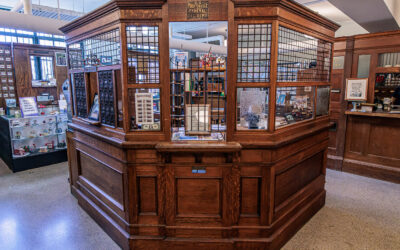
We had ring-side seats at the Houdini Séance at the American Museum of Magic on Halloween.
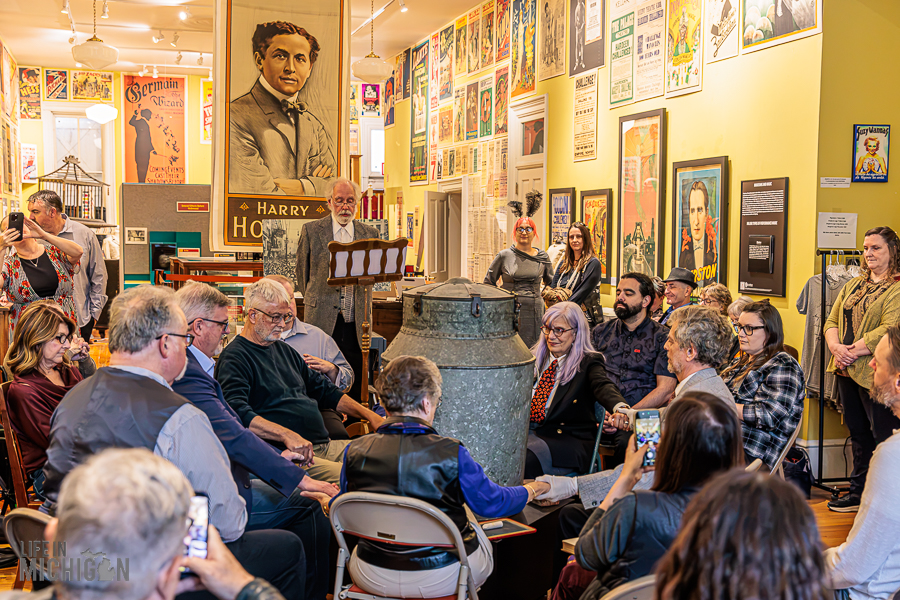
Houdini Séance at the American Museum of Magic on Halloween
Houdini Séance at the American Museum of Magic
On Halloween afternoon, exactly one century after Harry Houdini died at Detroit’s Grace Hospital, I found myself locked inside the American Museum of Magic in Marshall, Michigan.
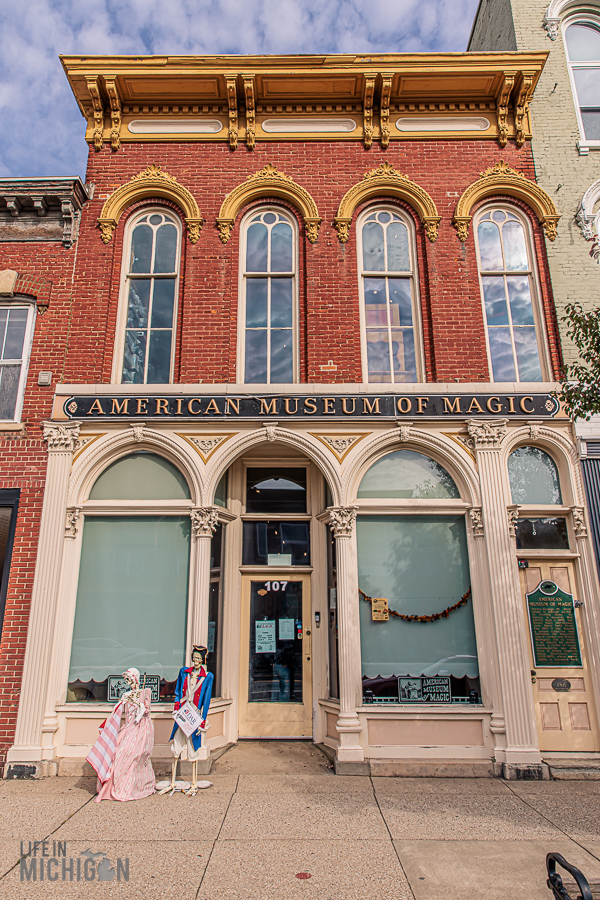
American Museum of Magic 2026
A few days earlier, my exercise coach asked if I had any plans for Halloween, and I shared that I was going to a séance but was skeptical we’d make contact with Houdini. She laughed and said, “It is a magic museum; I’m guessing they will have something up their sleeve.”
“Ha, everyone is a wise guy,” I thought. But her confidence that we’d make contact with him would have me holding my breath during the entire séance.
The American Museum of Magic
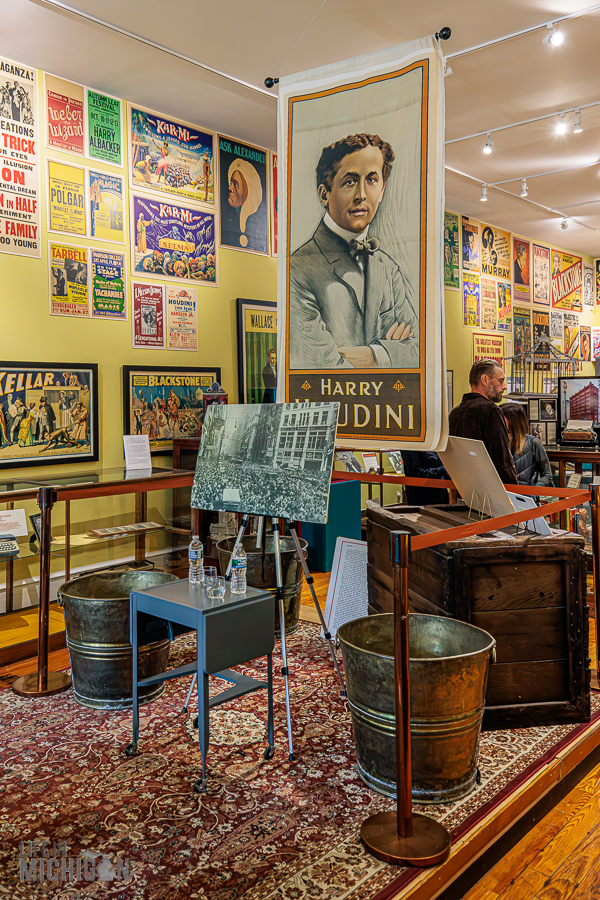
The American Museum of Magic is located in Marshall, Michigan, and was founded in 1978 by Robert and Elaine Lund. It contains the largest collection of magic artifacts open to the public. While waiting for the séance to start, museum board chair Jania Taylor shared a bit of its history.
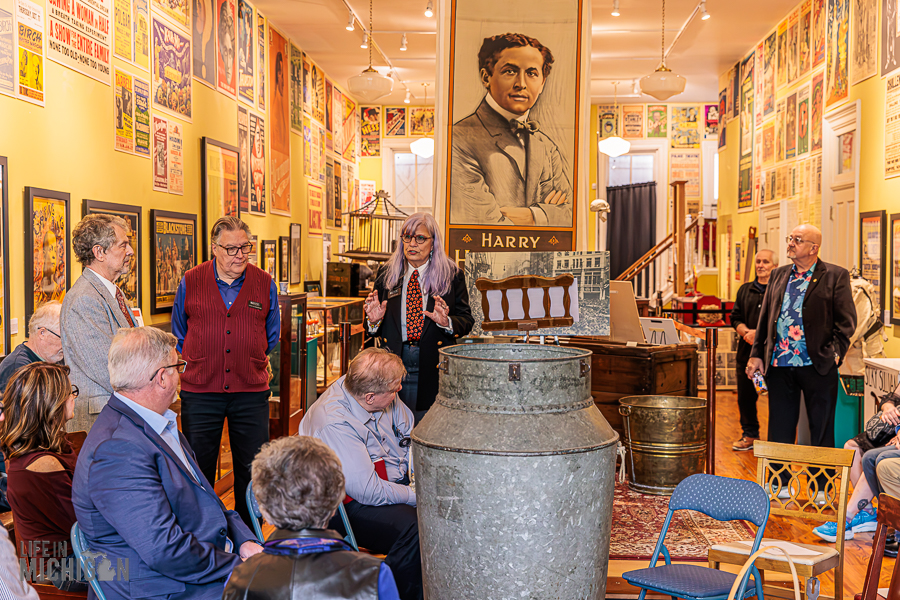
Museum board chair, Jania Taylor
Bob was a journalist in Southfield, Michigan, writing for Popular Mechanics and Motor magazines, and was passionate about magic. “He realized he wasn’t much of a performer, so he turned to collecting,” Taylor said with a smile.
As with any collector, items began filling drawers, hiding under beds, spilling into the garage, and eventually overtaking the house. This caused a knowing murmur of laughter from the audience.
A friend suggested, even before his wife, that he open a museum. Bob and Elaine began scouting locations across southern Michigan and discovered this building in Marshall. It was a rundown bakery, which Bob bought for $14,000 cash in 1974. They fell in love with Marshall because of its deep commitment to history.
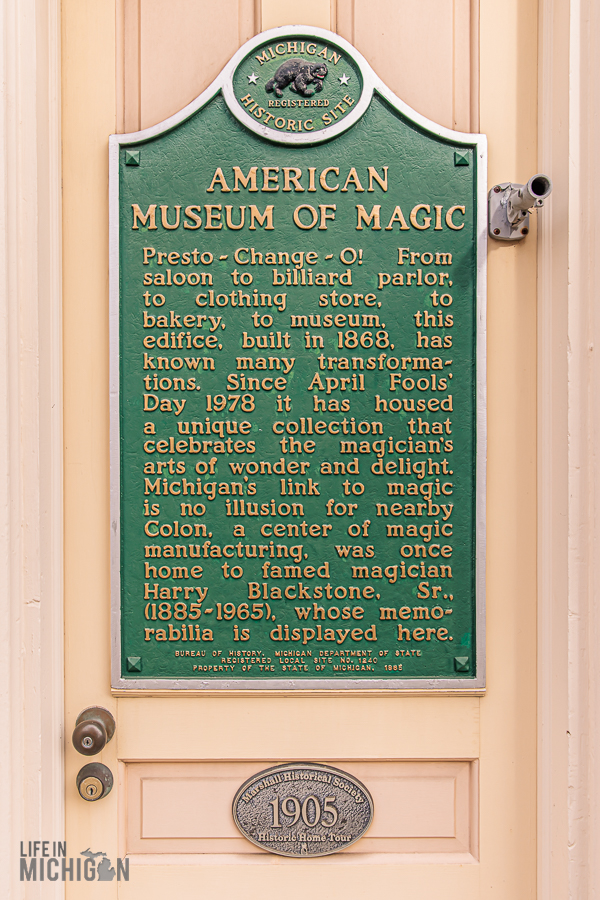
Exploring the Museum
We were lucky enough to find Dave Schwaninger, vice chair of the museum board, on the 2nd floor, telling stories near a case with handmade props used by Tall Grass Showmen. These were magicians who traveled to rural communities to perform.
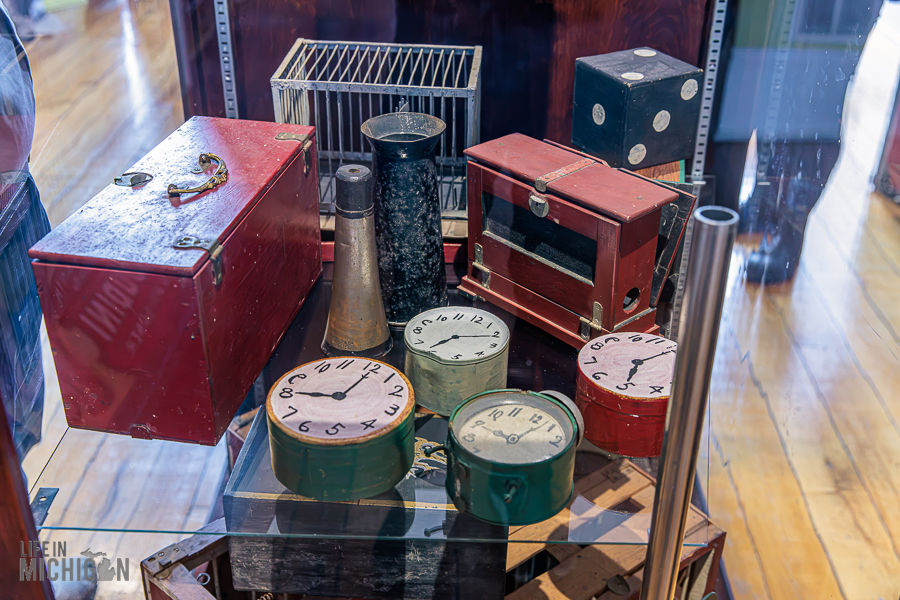
handmade props used by Tall Grass Showmen
“They would perform five different shows over five nights, staying in a community for a week,” Schwaninger explained. “They never made a lot of money, but they were deeply committed to their craft and handmade much of their gear. Anyone in magic looks at this display and notices props crafted from simple cigar boxes, wire, and glue. Yet one of these tall grass performers, Green the Magician, filled tents night after night and returned to the same rural towns year after year. That tells you that despite the homemade apparatus, his performance was truly top-notch.”
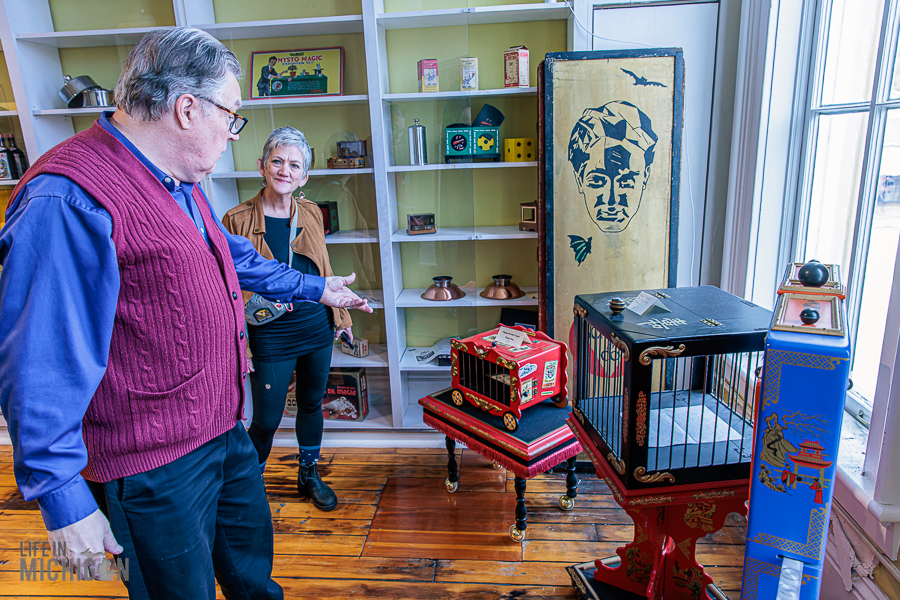
Dave Schwaninger, vice chair of the museum board
We could have spent hours listening to his stories, but time was ticking. We made our way back to the first floor, where we bumped into Marsha Lambert, the museum board’s secretary.
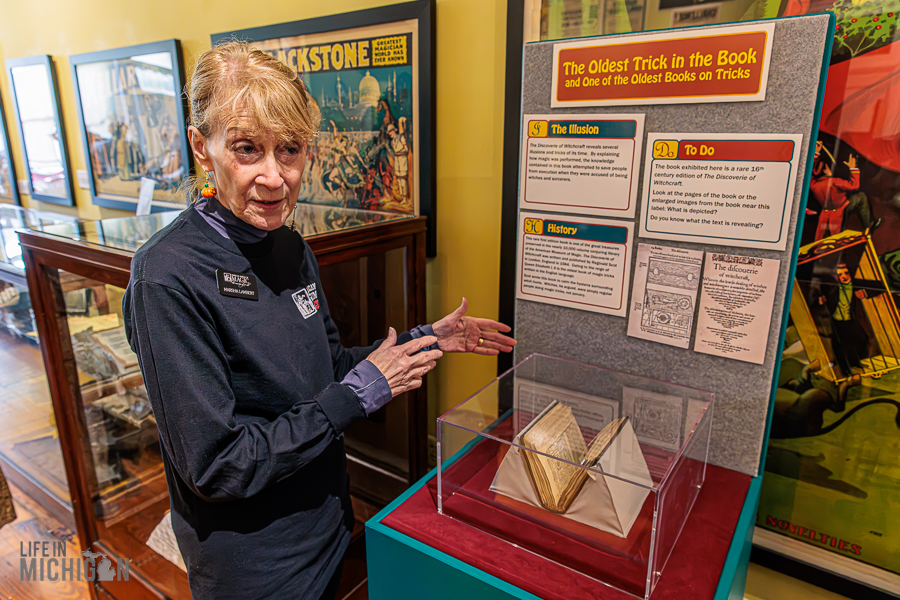
Marsha Lambert, the museum board’s secretary
She showed us a very old book about magic that they had on display. It is one of thousands of books and materials the museum owns, which are kept in the Lund Memorial Library, a block behind the museum.
Let the Séance Begin
Our hosts for the séance were longtime board member John Sherwood and séance supervisor Philip Haggerty, who began by giving the ground rules. There would be no parlor tricks, no secret accomplices, and no fraudulent table-tipping. In fact, attendees were warned that if anyone tried any amateur trickery, the magicians in the room would expose them.
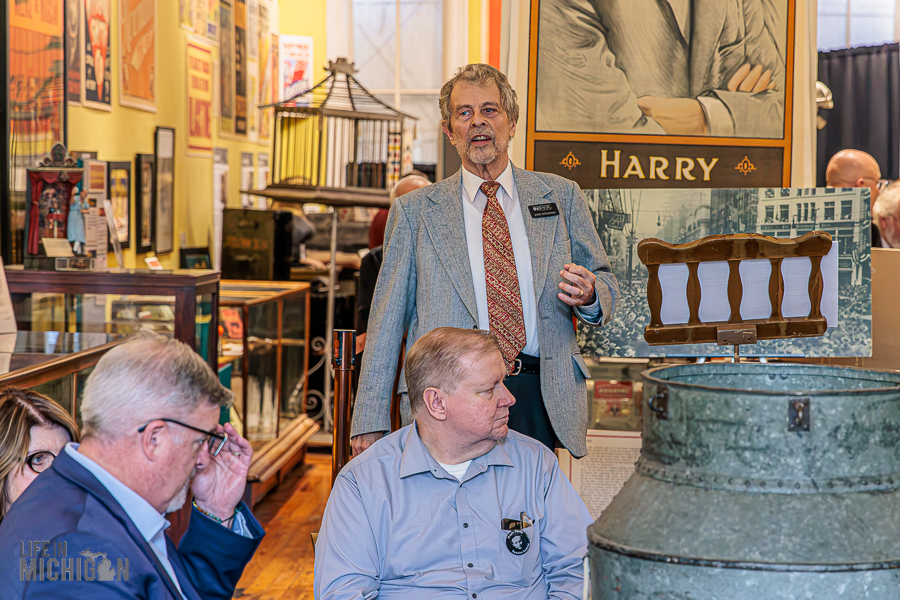
Board member, John Sherwood
While taking my seat, I showed my naivete when I asked John Sherwood, a longtime board member, whether they’d use a Ouija board. He laughed and said something like, “That’s a game.”
I didn’t say it, but I wondered, “How will we know if we reach Houdini?”
It didn’t take me long to find out.
Locking the Doors
With everyone in their place, the doors were locked, and the phone lines were disconnected. A circle of skeptics, historians, and magicians gathered around Houdini’s original milk can escape apparatus. The goal was to make contact with Houdini’s spirit.
In 1978, museum founder Bob Lund had tried to coax Houdini’s spirit with a bagel and lox placed inside the milk can. It produced nothing, which they blamed on the bagel not being kosher and lacking cream cheese. For this séance, Sherwood formally corrected the oversight, lowering an authentic, cream-cheese-slathered bagel and lox deep into the sealed metal can.
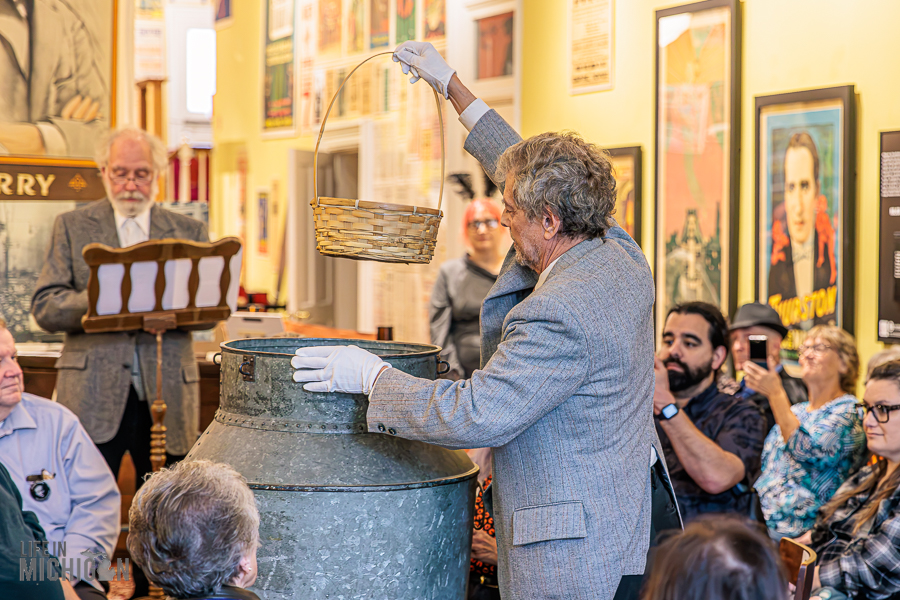
John Sherwood putting the bagel in the milk can
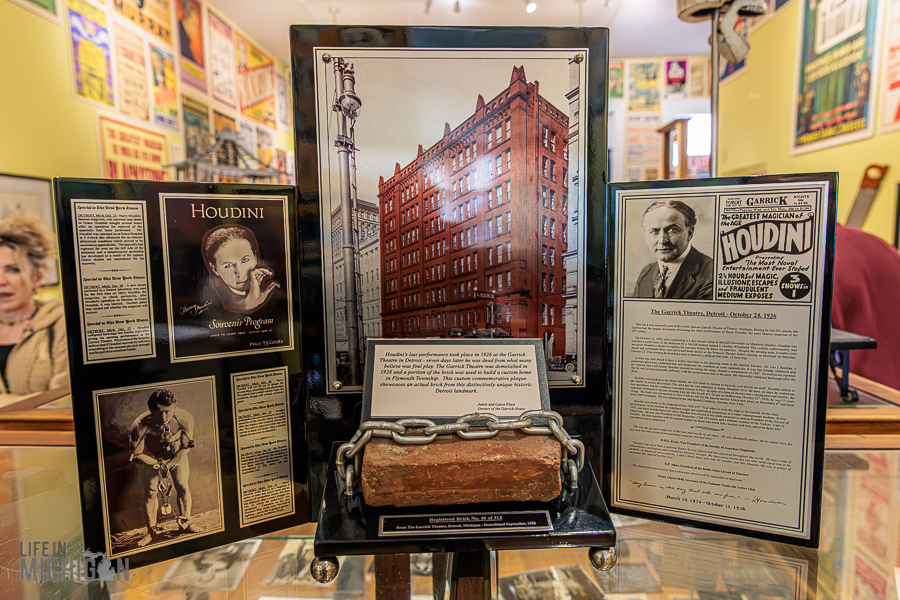
Surrounding the séance circle were artifacts to help us connect with Houdini: a brick salvaged from the demolished Grace Hospital, a set of locked handcuffs, Houdini’s personal spirit horn, a vintage chalkboard, a feather, and a remembrance candle.
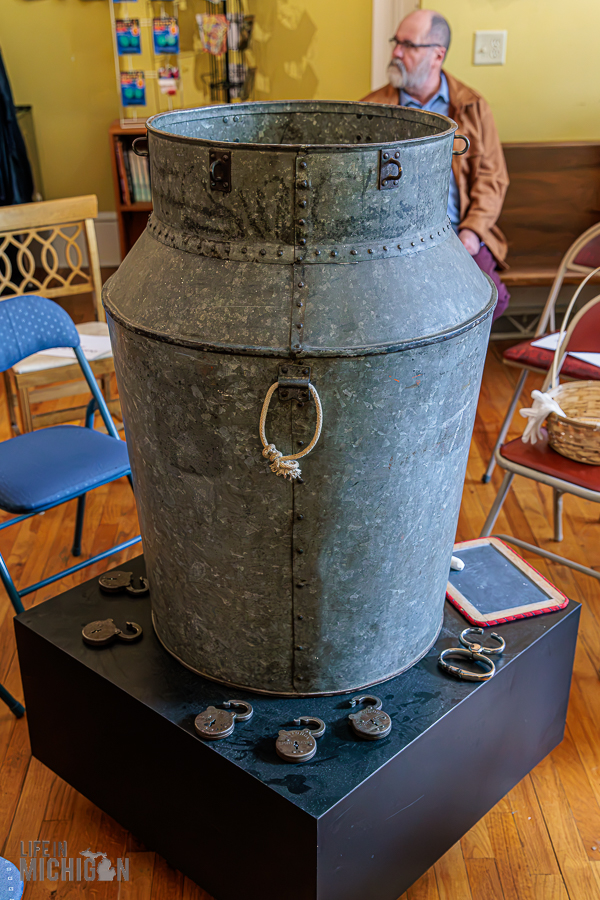
Houdini’s Milk Can
Five Minutes of Silence
Houdini’s passing occurred at 2:26 p.m. Eastern Daylight Time, so at 2:25 p.m., the circle joined hands. Fun fact: Elaine Lund was born at Grace Hospital the day Houdini passed?
Haggerty gave Houdini’s spirit multiple avenues to prove his presence:
- Would the handcuffs unclick?
- Would a tap echo from within the milk can?
- Would the feather twitch, the candle flame flicker out, or a chalk scribble appear on the board?
- Or would we simply hear the scrape of a plate as Houdini finally took a bite of his favorite lunch?
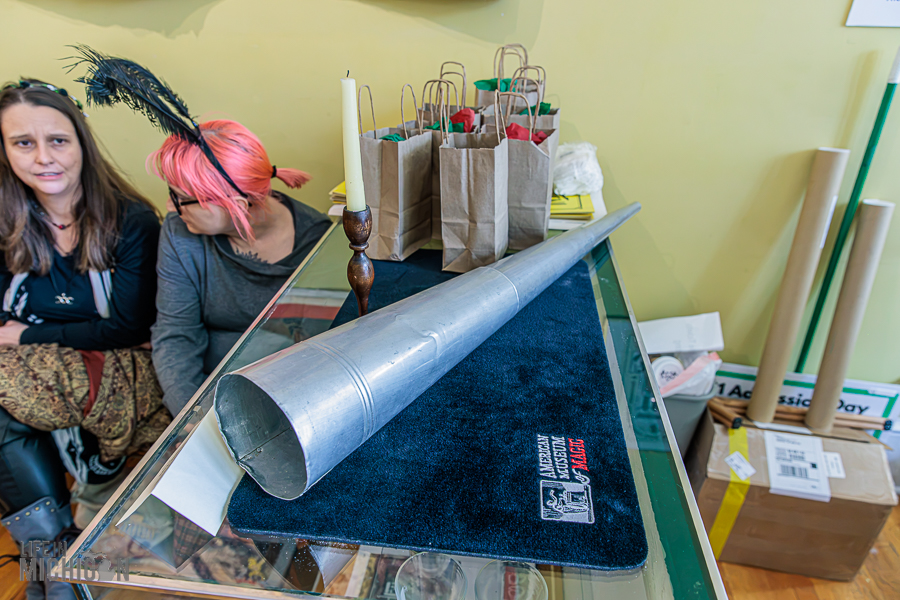
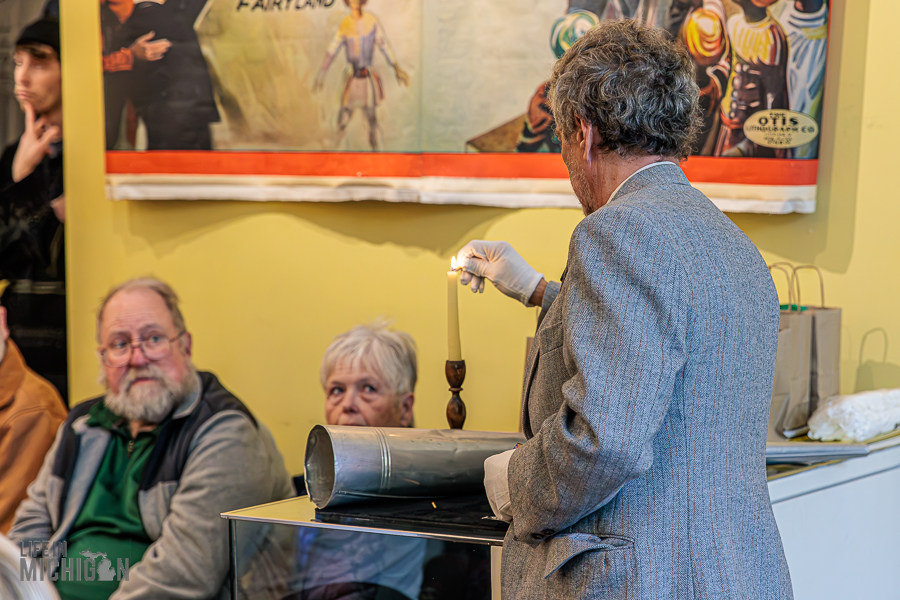
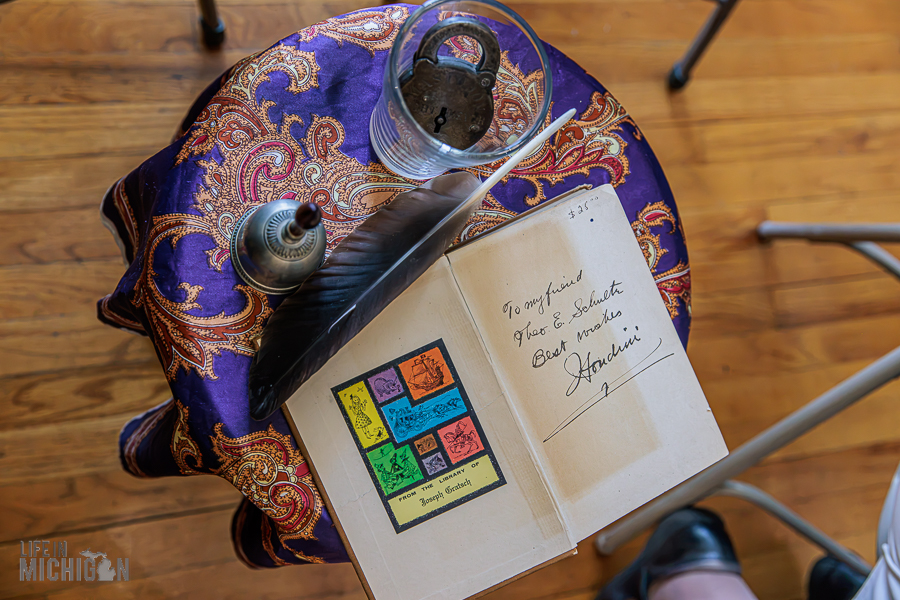
In a room packed with people holding their breath, the quiet was heavy. You couldn’t help scanning the crowd, wondering whether they were skeptics or not, during the two separate periods of silence.
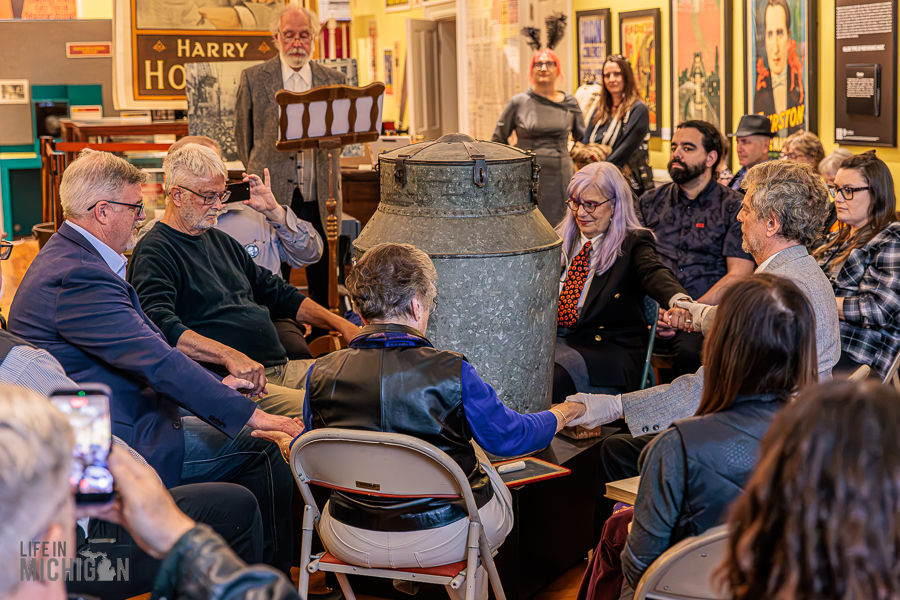
5 minutes of silence
The Verdict
Finally, the timekeeper called the final minute.
Sherwood checked inside the milk can. The bagel sat untouched. The locks remained fastened, the chalkboard untouched, the candle burning steadily. Just as in 1936, when Houdini’s widow, Bess, conducted her final séance on a Hollywood rooftop, Houdini remained silent.
Yet the mood in the room wasn’t defeated; it was celebratory.
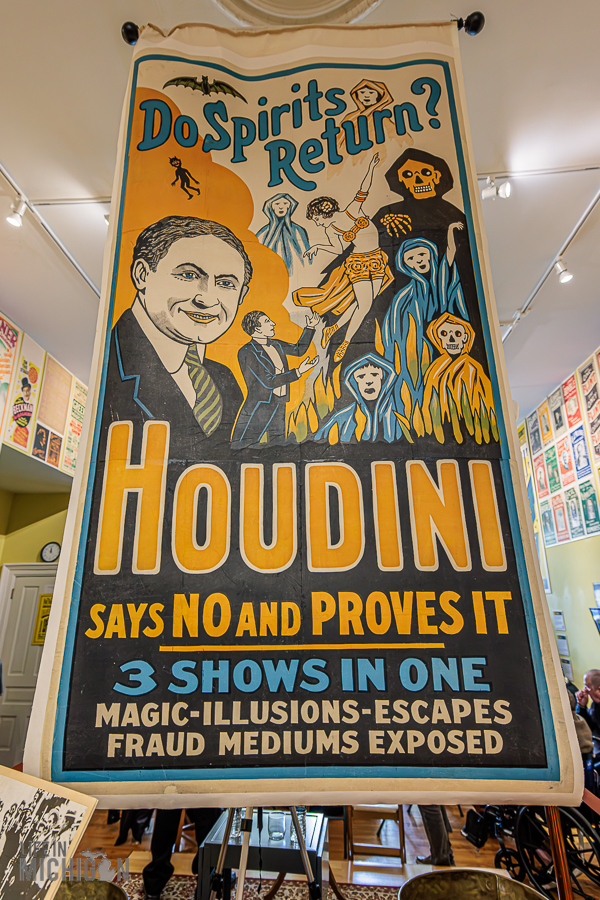
As Haggerty noted in his closing remarks, Houdini spent his final years debunking fraudulent mediums and protecting grieving families from charlatans. When Bess closed the book on séances in 1936, she announced that spirit communication simply wasn’t possible.
The real trick, it turns out, wasn’t returning from the dead; it was making sure none of us forgot him in the first place.
Planning Your Visit
Individuals from around the world travel to the Marshall to study the museum’s materials. Educating individuals about the history of magic and the people who have performed it is integral to its mission. If you are interested in visiting the museum, please check its website, as hours vary.
Photos
Many more pictures in our gallery.
Become a Supporter!
We believe Michigan is more than just a place—it’s a way of life. This belief is the foundation of our mission, which is to document the stories, community life, and cultural experiences that mainstream media often overlook.
Through digital publishing, photography, and podcasting, we share Michigan’s stories, culture, and spirit with a global audience, maintaining a permanent archive that ensures anyone, regardless of where they live, can find and experience the traditions that define our state.
Your support enables us to continue sharing the unique and captivating stories that showcase Michigan in all its vibrant glory. Whether you donate to our mission, treat yourself to a warm hoodie, or provide ongoing support through Substack, every contribution helps enhance our mission.
If our content resonates with you, we encourage you to become an ambassador for our stories. Share our work on your social media or forward a link to someone who would appreciate it as much as you do.
Stay Connected
We’d love it if you liked our Facebook page. Better yet, subscribe to our Sunday Sip newsletter on Substack. You can also find us on Instagram and YouTube.