
From a community potluck to Michigan’s forests, join us on our journey into the addictive, hilarious, and joyful world of birding.
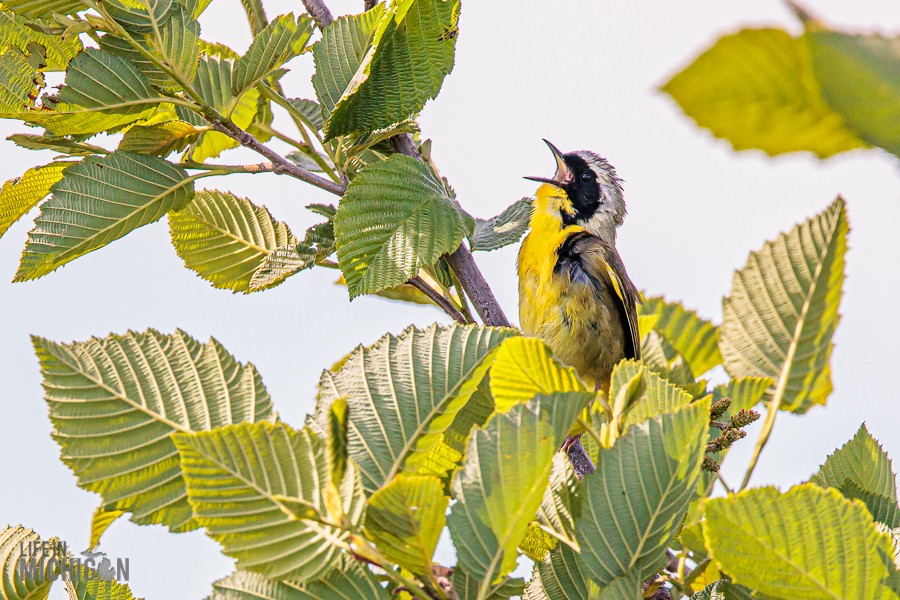
Common Yellowthroat
The Open Spoon
When I open the door to the Washtenaw Food Hub on a full moon evening, I feel like I’m stepping into a different time or dimension. Perhaps it’s the wooden folding chairs in the community room, strikingly similar to those used at my grandmother’s church decades ago, that trigger the nostalgia. There’s a distinct sense of magic in the air, a quiet reverence reminiscent of old-fashioned church potlucks and shared community spirit.
We are there for Liz Barney’s monthly storytelling event, which she calls the Open Spoon. Participants bring a dish to pass, share a meal, and then pass around a symbolic wooden spoon. When you hold the spoon, it’s your turn to share a story based on the night’s central theme.
On this particular evening, for the first time, Chuck took the spoon from Liz. Though his story began with a hint of hesitation, he soon found his confidence as he shared his joy for birding. That magical golden hour light filtered through the windows, creating an additional layer of intimacy among the dozen or so listeners as we encouraged him with nods and warm smiles.
June’s theme was joy.
Chuck’s joy for birding started in our backyard, he explained to the group. A few of the regulars have names, like the pair of Mallard Ducks, whom he calls Martha and Ron. His birding story ended by sharing that he is now “pishing” to call birds. He shared how he’d experimented with “pishing” while we were in Manistee and pulled an American Redstart from its hiding place in the treetops. Just remembering the moment that Redstart responded to his “pishing” changed Chuck. His face lit up, his body visibly relaxed.
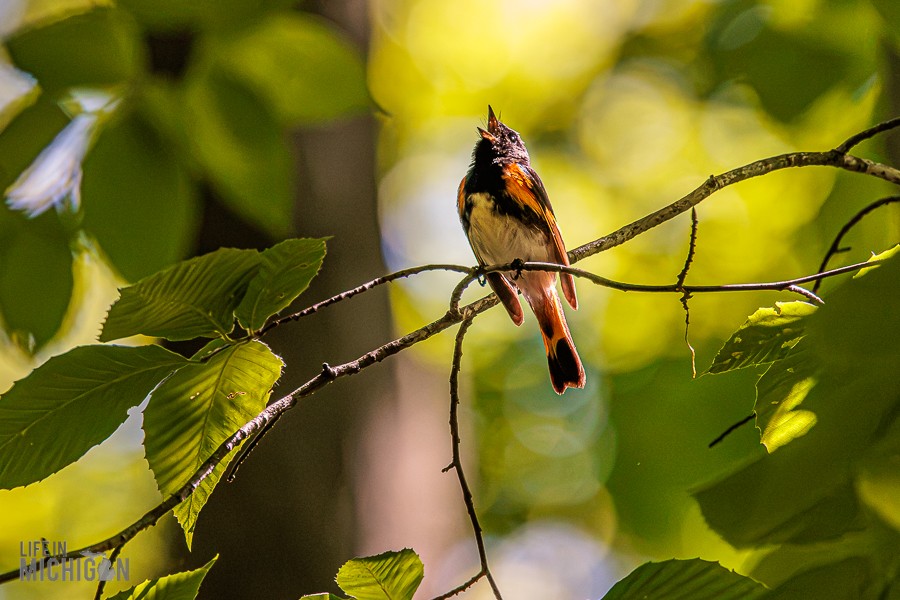
American Redstart
If this year had a theme for us, it would be birding. It all started in January when we had the chance to interview Michigan Audubon’s new CEO, Kathleen Mennillo, for our podcast. Always on the search for new experiences, and feeling a sudden wave of enthusiasm, we signed up for two of their birding tours as soon as the interview was over.
The Cerulean Warbler Bird Tour
Our first excursion took us to the Otis Farm Bird Sanctuary in Hastings, Michigan, for the Michigan Audubon Cerulean Warbler tour. Led by expert guides Anne and Doug Klein from the Barry County Bird Club, our group rendezvoused at the Fen parking area, a gorgeous spot overlooking a marsh that was quickly packed with an unusually high number of Subarus. I’d be willing to bet at least 40% of the cars were Subarus, which made me wonder: Is there a direct correlation between birding and Subaru ownership? Does Amy Tan drive one?
When the Kleins asked if anyone needed a pair of binoculars, I confidently declined, assuming mine were up to the task.
Lesson #1: Buy the best birding binoculars you can afford. I soon realized mine were better suited for spotting giant wild turkeys than a tiny bird the size of a mouse.
Finding the Cerulean Warbler
Leaving the sanctuary on Heaves Road, our group formed a slow-motion caravan through the backroads, pulling over at the woodsy corner of Goodwill and Whitmore Road, where Cerulean Warblers are known to nest.
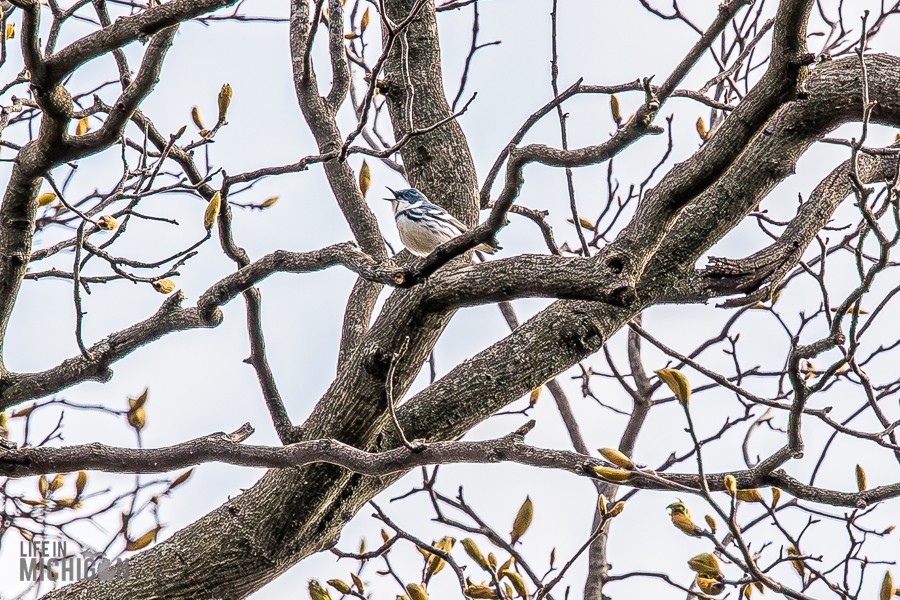
Cerulean Warbler
If you want to be a serious birder, you have to learn bird calls. To help us newbies, Anne played the Cerulean Warbler’s call on her phone. While the Merlin app describes it as “three buzzy notes followed by four fast warbles,” Anne gave us a translation we could actually hold onto: “Poor, poor, poor, pitiful me.”
Armed with that phrase, I could suddenly pick out their calls amid the barrage of background tweets. I watched another birder who had taken her tech to the next level: Merlin recording on a cord around her neck, binoculars at the ready. She’d point up into the canopy and shout instructions: “30 feet up, to the left of the Maple, on the branch pointing down, near the clump of leaves!” My brain almost exploded trying to decipher her tree-coordinate system while every other seasoned birder immediately snapped their lenses directly onto the target.
Lesson #2: Get to know your trees.
Thankfully, the Kleins had laser pointers to guide our eyes. Whenever a bird was difficult to identify, the air filled with rapid-fire callouts of physical traits—black beak, small head, white belly plumage—that had my head swimming. It felt exactly like a high-stakes scavenger hunt.
A few other birds we spotted on the tour.
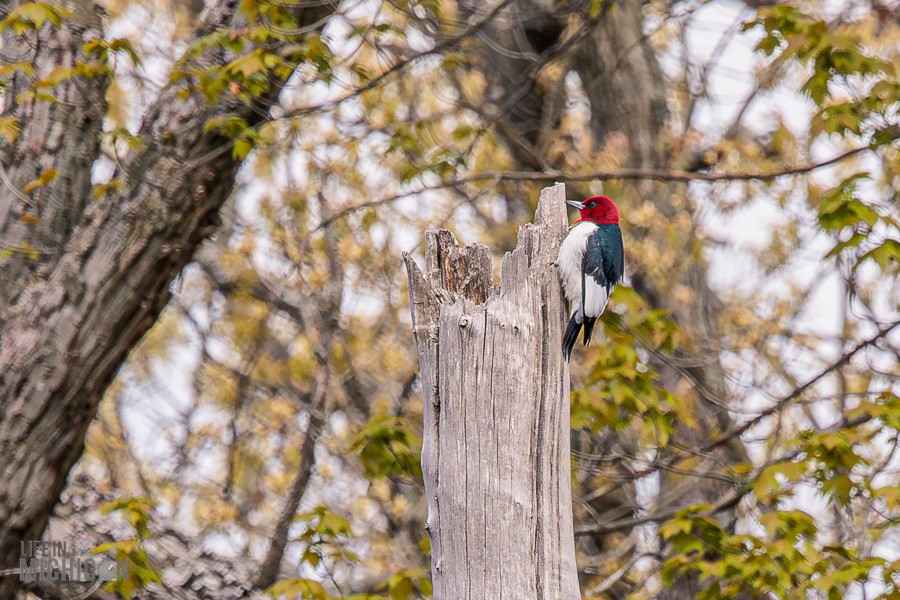
Red-headed Woodpecker
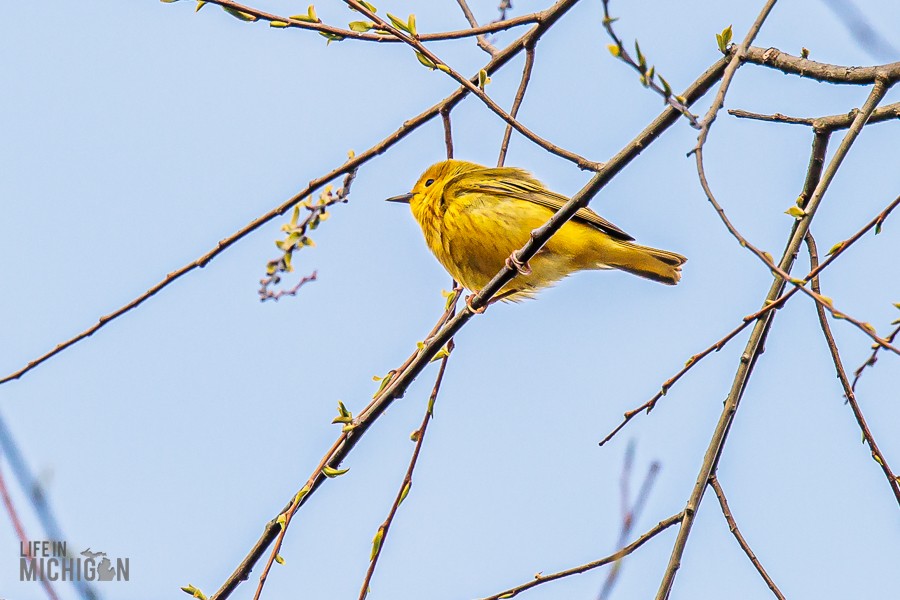
Northern Yellow Warbler
The Life List
Who knew birding could be so hard? These tiny, beautiful creatures prefer the upper canopy, at least 50 to 80 feet up. Spotting a Cerulean Warbler as it darted through those towering Maples felt like standing on the fifty-yard line at Michigan Stadium, desperately trying to catch a glimpse of a coin as the referee tossed it at center field.
I headed home from Hastings with a classic case of “warbler neck,” a powerful craving for high-end binoculars, and some incredible new additions to my official Life List.
The Kirtland’s Warbler
Naturally, with my new Life List officially established, I had to add the Kirtland’s Warbler. It is one of the rarest songbirds in North America. Because it has a thing for nesting in young jack pine forests, they were driven to the brink of extinction; by 1970, there were only about 300 of them left on the entire planet.
To find it, we registered for the Michigan Audubon’s Kirtland’s Warbler tour in Grayling, Michigan. We met our guide, Croix, at the Hartwick Pines Visitor Center, where he checked us in and distributed adventure maps. From there, we formed a caravan and headed out to a strictly protected habitat area on Hurt Road.
Croix had two rules:
- Stay on the trail. Unlike most warblers, Kirtland’s Warblers are ground nesters, and a stray step could be disastrous.
- No playbacks or “Pishing.” Croix joked, “We don’t want to mess with their feng shui.”
Battle of the Birds
Almost immediately, we spotted one singing his heart out.
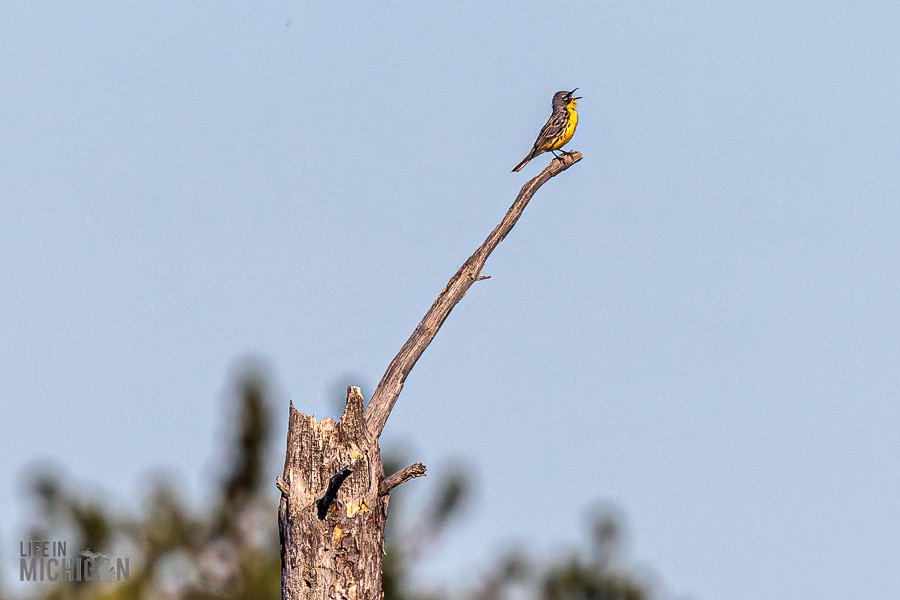
Kirtland’s Warbler
Kirtland’s Warbler is way easier to spot than the Cerulean Warbler. They love to perch proudly on the dead tree snags that poke out above the young pines, making them perfect targets for binoculars. The bright, sunny morning didn’t hurt our chances, either.
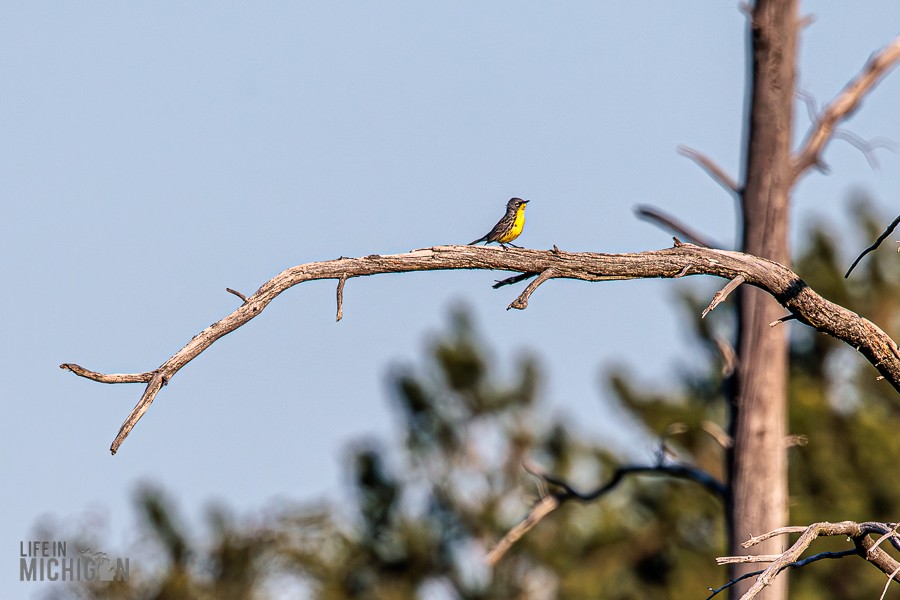
Kirtland’s Warbler
It was like a battle of the bands, with several males duking it out with their songs, each trying to out-sing the other to protect his turf. It was spectacular.
The Kirtland’s Warblers weren’t alone.
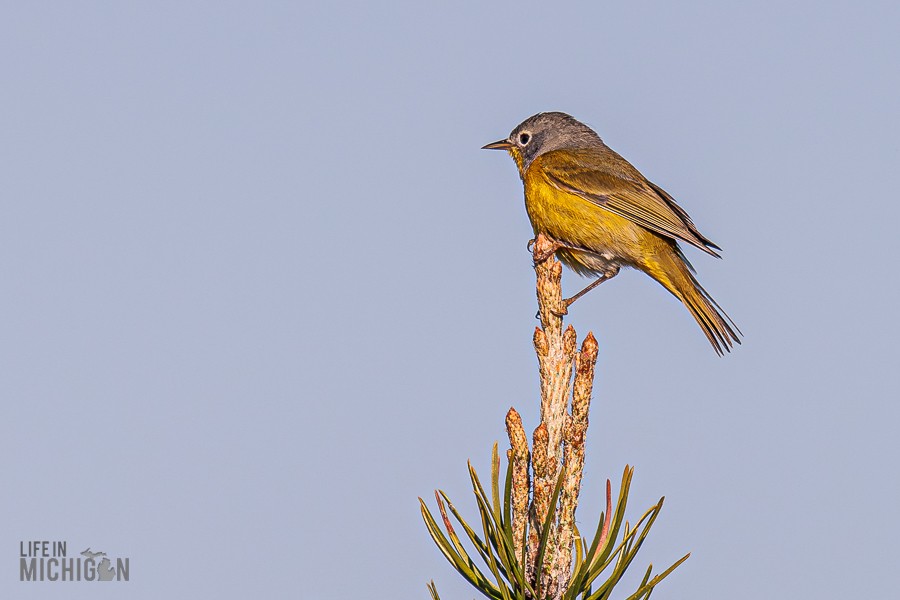
Nashville Warbler
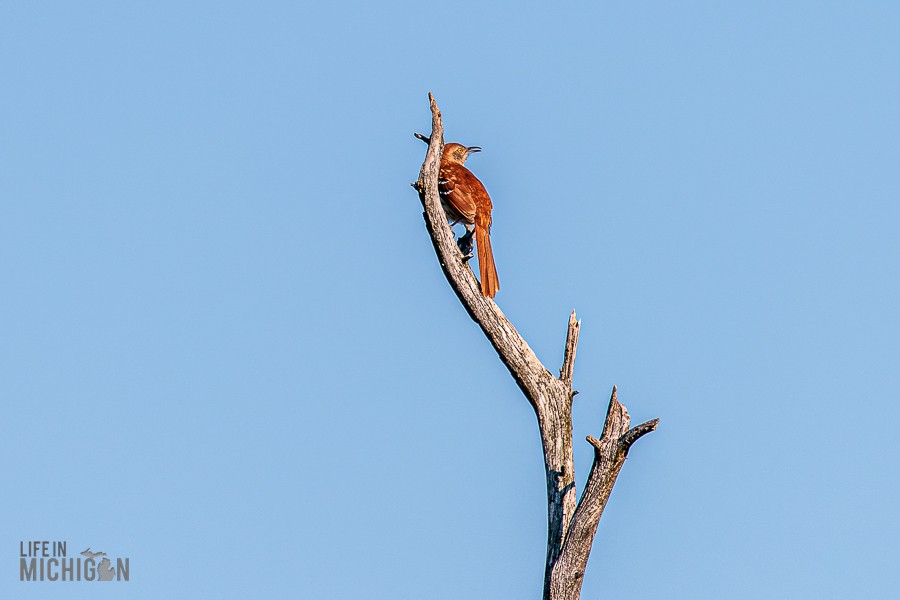
Brown Thrasher
Birding Documentary
Towards the end of the tour, a birder mentioned “Listers,” a documentary about the wild world of extreme birding. It is absolutely hilarious! It’s currently on YouTube and, amazingly, has no ads.
Birding On Our Own
Now that we’ve been out in the field, we’ve mastered a few essential birding tricks. Our favorite is the “eye-lock”: when you spot a bird fluttering in the treetops, you have to keep your naked eyes glued to it while bringing your binoculars straight up to your face. If you look down at your hands or look away for a split second before raising the lenses, forget about it. You’ll never find that bird again.
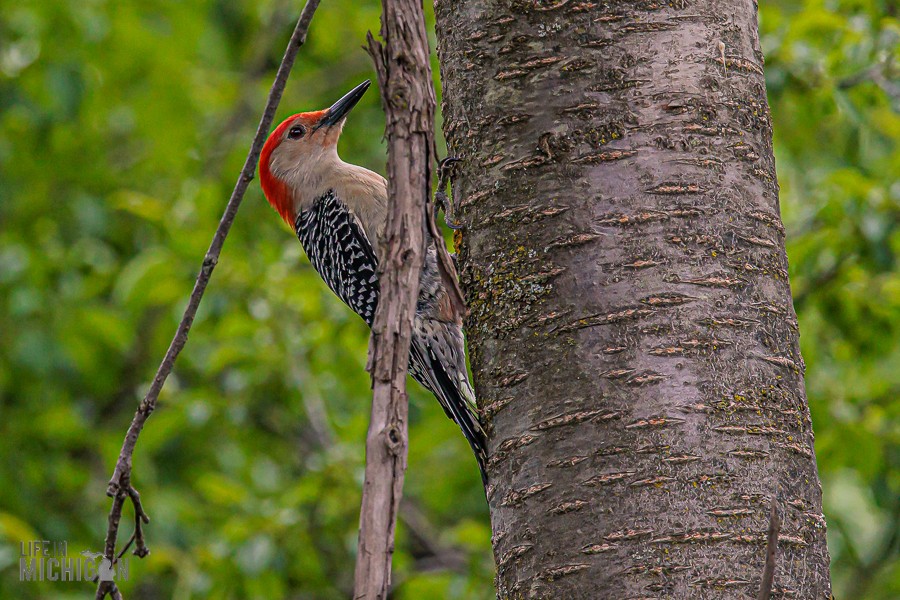
Red-bellied Woodpecker
Kensington Metropark
Before we became official birders, we visited Kensington Metropark. We’d heard the stories about how the birds at Kensington Metropark in Milford, Michigan, would eat right out of your hand. It isn’t just a story; they do eat right out of your hand. And it was thrilling. It was like our gateway drug. (I wrote about it in a Sunday Sip.)
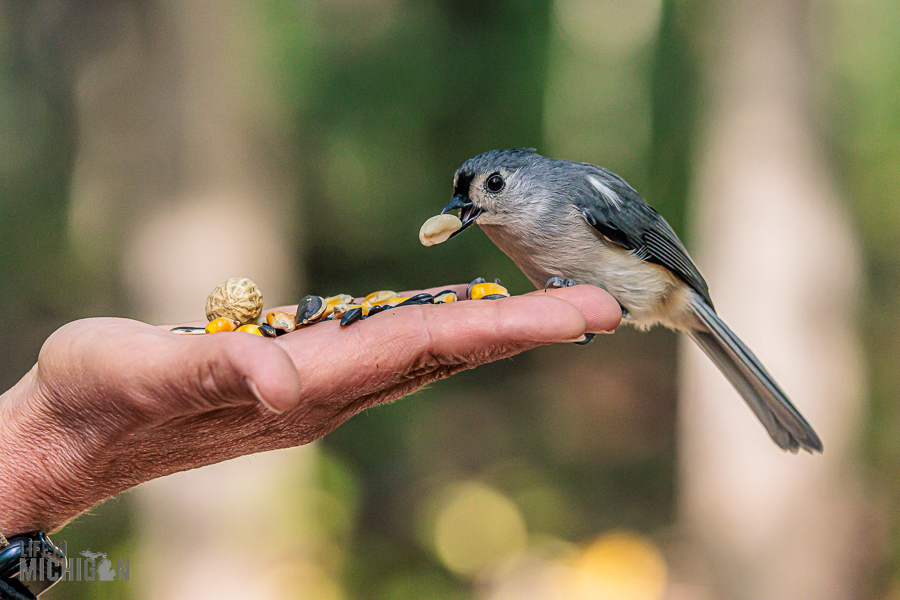
We returned recently with our new birding skills and fancy binoculars. Chuck got me the Nikon Monarch M7s for my birthday.
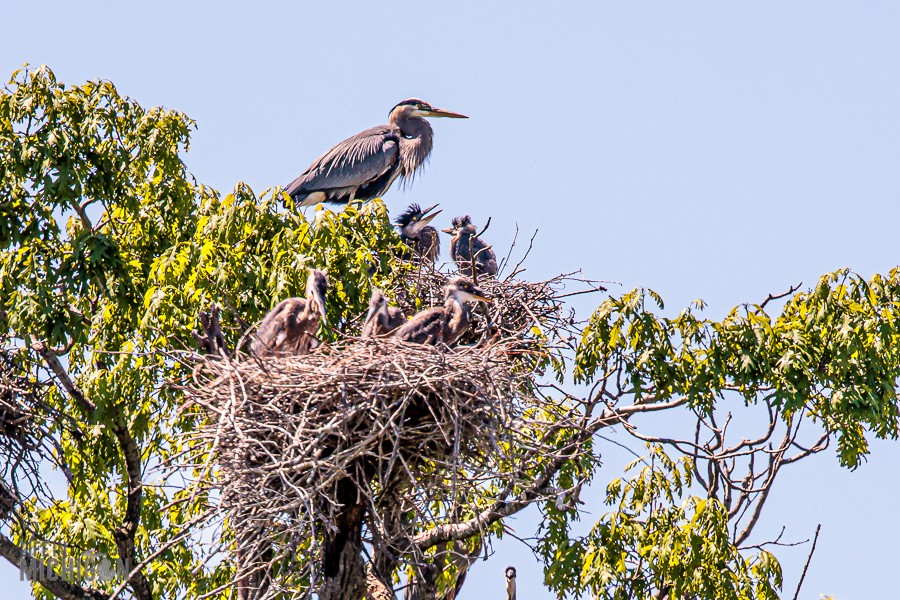
Blue Herons at the Kensington Metropark Rookery
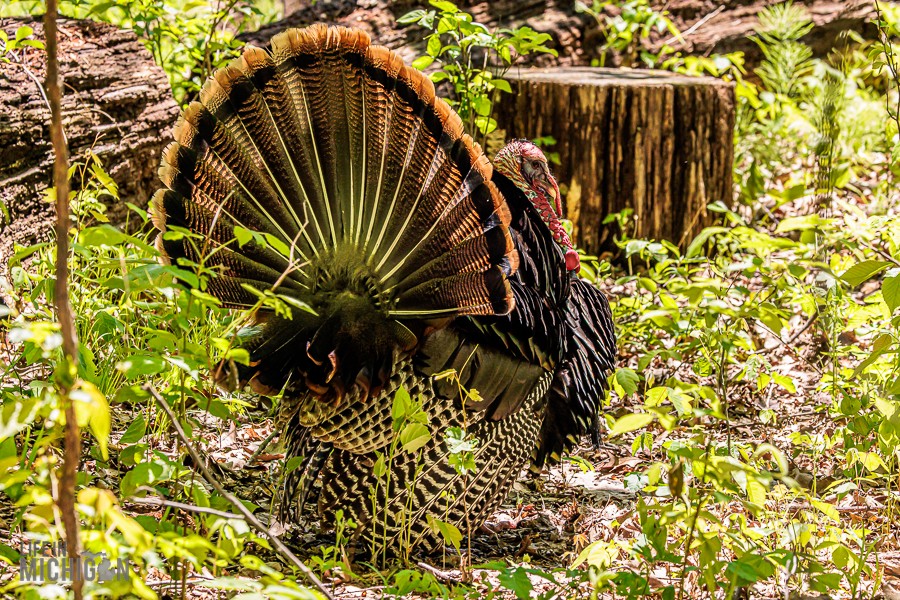
Wild Turkey
Lake Erie Metropark
We also visited Lake Erie Metropark in Brownstown Township. Unfortunately, we just missed the peak of the Spring Migration, but a few stragglers were still hanging around, willing to have their pictures taken.
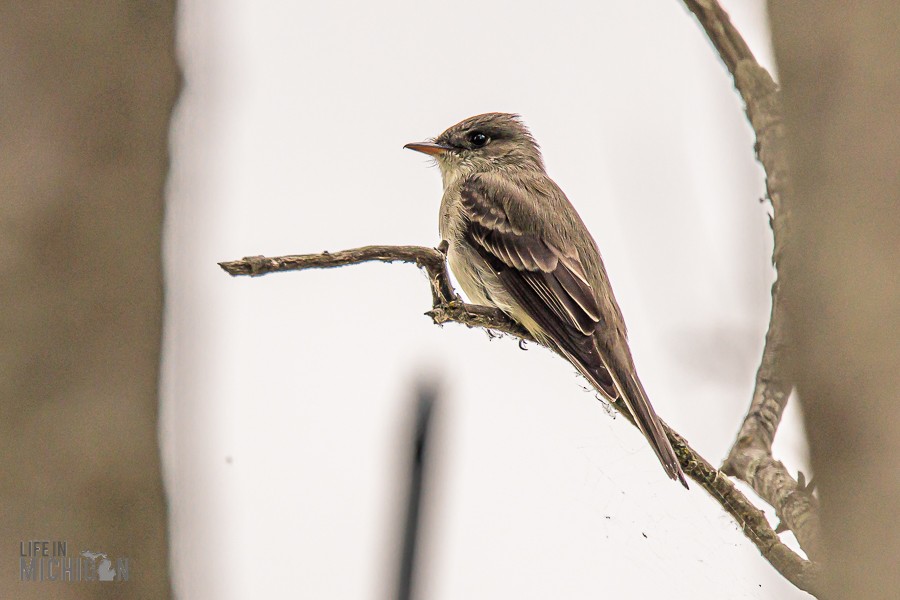
Eastern Wood-Pewee
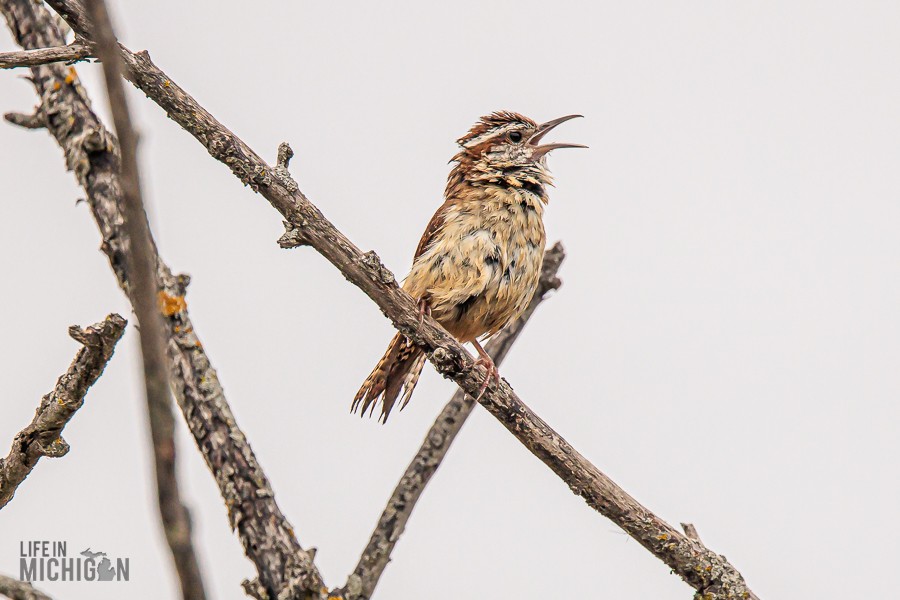
Carolina Wren
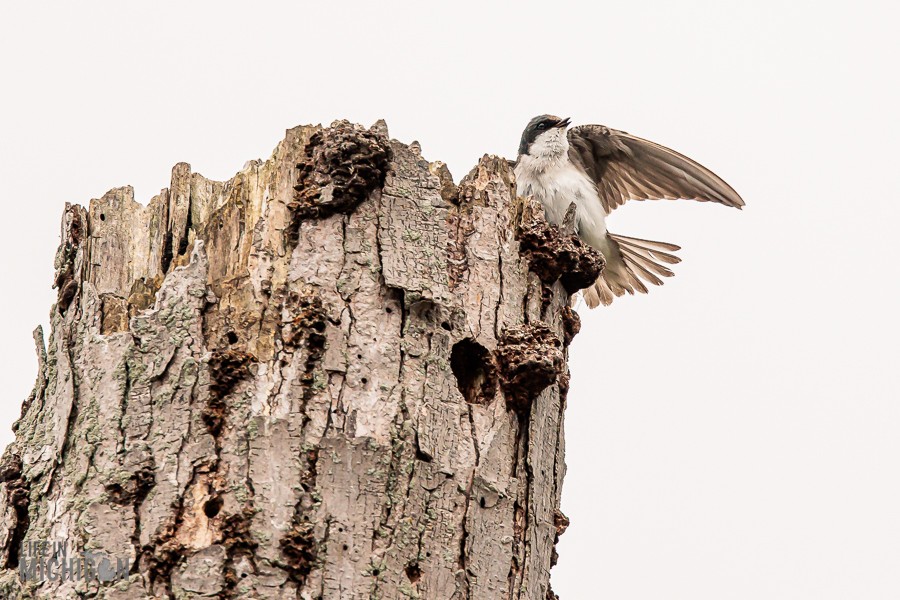
Tree Swallow
Manistee, Michigan
We were in Manistee so I could attend rug hooking school, and Chuck was on his own during the day. I got a text from early on the second day, “Babe. Indigo Bunting!”
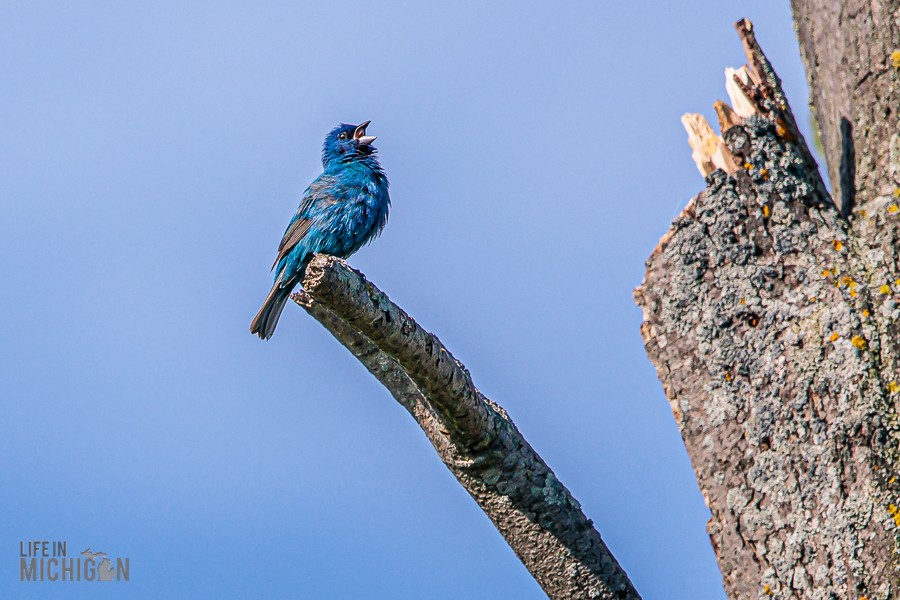
Indigo Bunting
It has been on Chuck’s “Life List.” He had gone out to Arcadia Marsh Nature Preserve in search of Wood ducks as the eBird app (another must-have birding tool) indicated that it was a hot spot for them. Turns out the Wood ducks were nowhere to be seen, but the Bunting, Eastern Kingbird, and Common Yellowthroat were happy to pose.
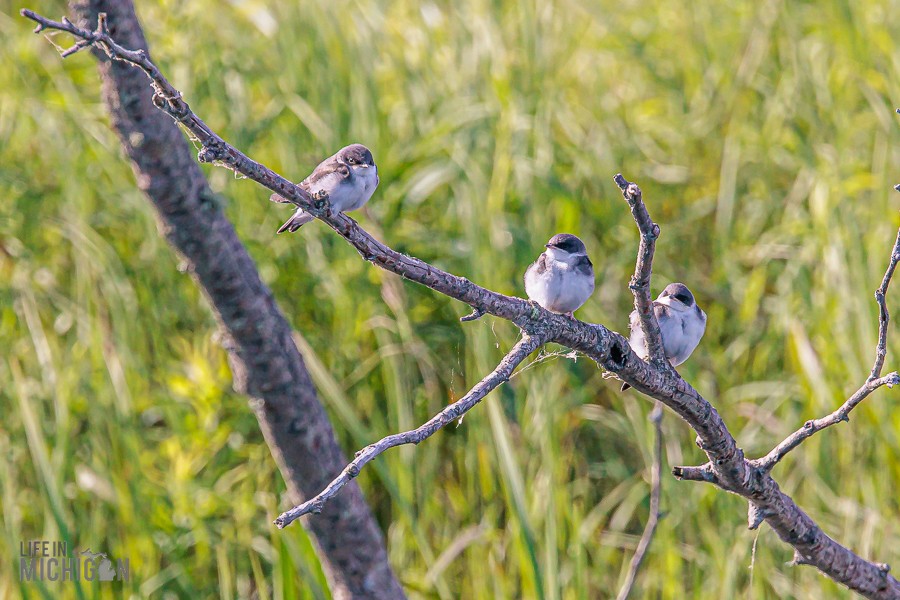
Eastern Kingbird
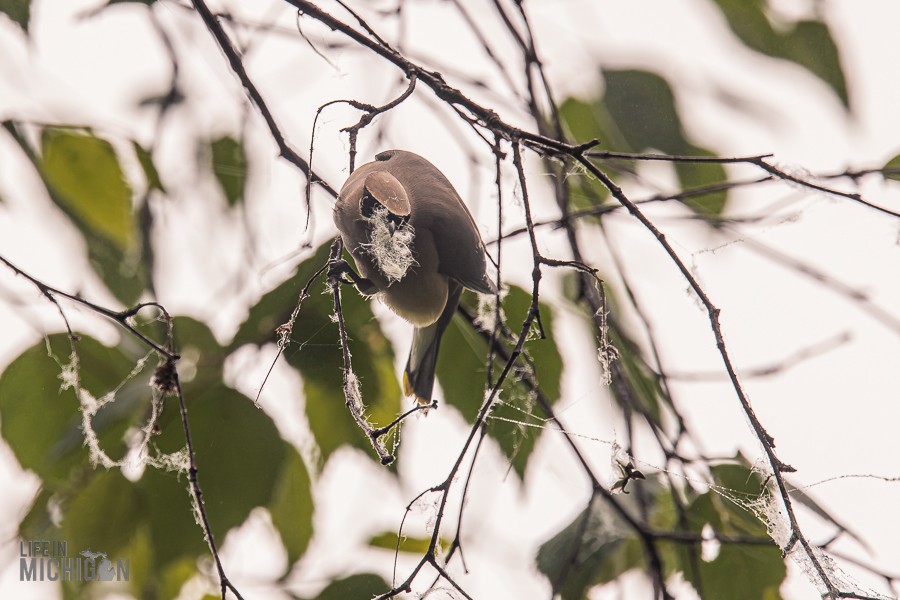
Ceder Waxwing
Our Backyard
We are not at Amy Tan’s level of backyard birding, but we do our best to keep our birds happy.
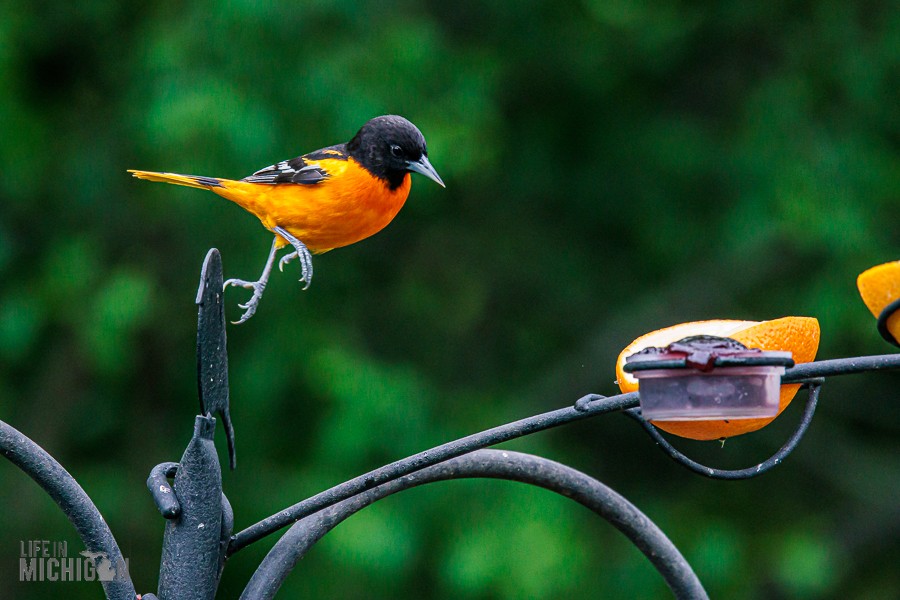
Baltimore Oriole
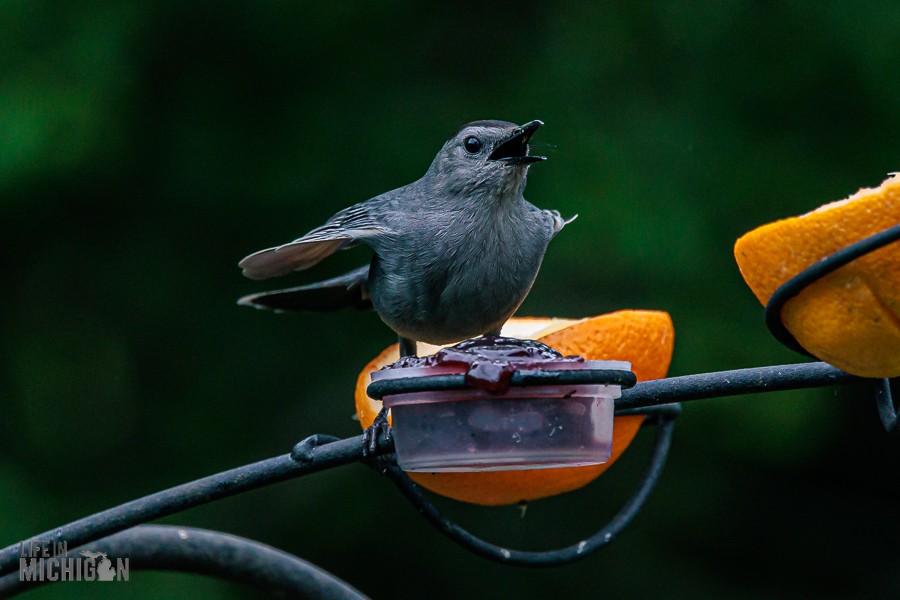
Gray Catbird
Chuck was right when he held that wooden spoon: birding is pure joy. What started as a casual interview with Audubon’s CEO became a gateway to birding. We might still be working on locating the birds with our binoculars, and we may never quite reach Amy Tan’s level, but every time we hear a tweet, we stop and listen.
Photos
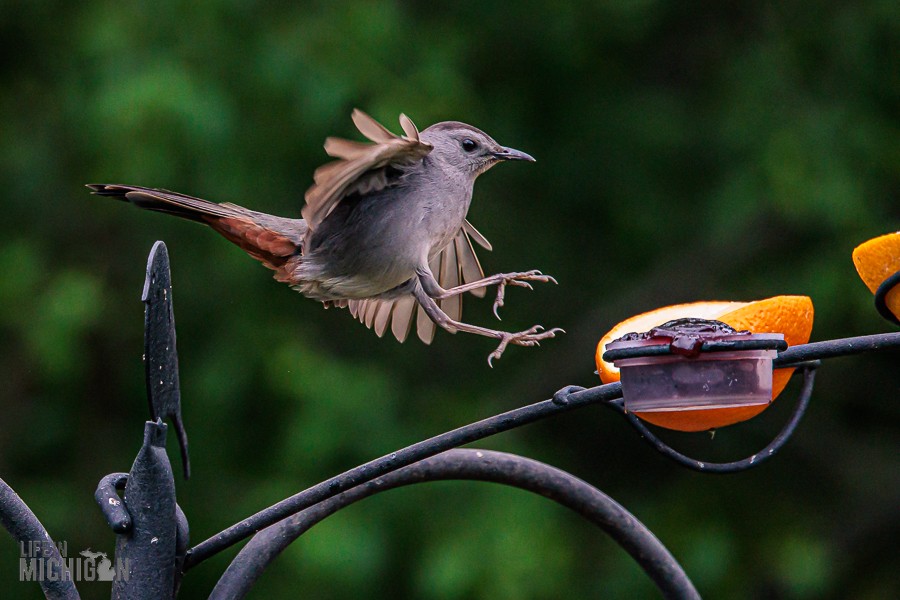
Gray Catbird
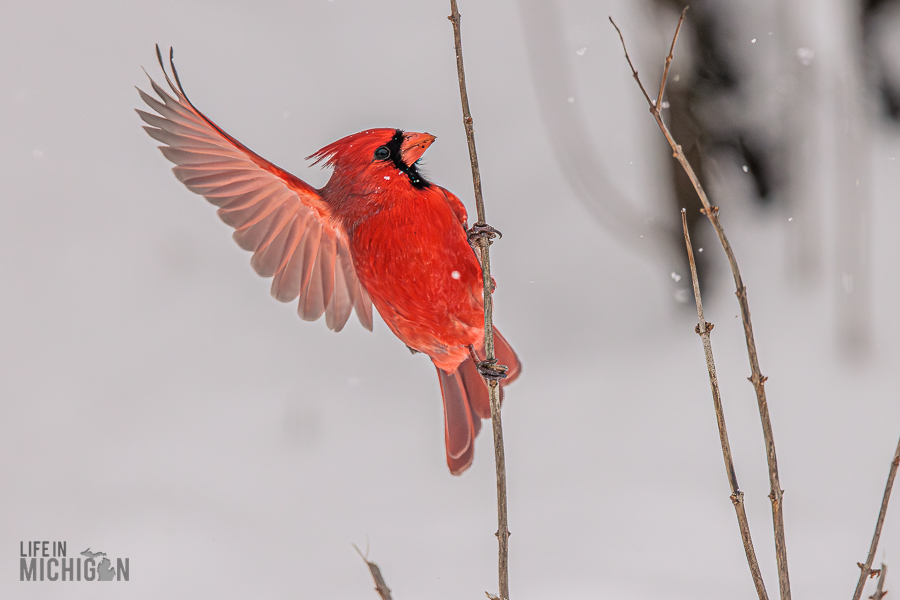
Northern Cardinal
There are more birding photos in our galleries:
- Birds and wildlife found during a visit to Manistee with stops at Arcadia Marsh Nature Preserve, Arcadia Dunes, Manistee, and Magoon Creek Nature Area
- Kensington Metropark on Memorial Day 2026 in search of birds
- Kirtland’s Warbler near Hartwick Pines in Grayling with Michigan Audubon tours
- Lake Erie Metropark in Brownstown Township
- Our backyard buddies in the Spring of 2026 (Ann Arbor)
- Michigan Audubon Society Cerulean Warbler tour on May 11, 2026, in Hastings, Michigan
- A visit with the birds of our backyard, including the delightful “Canadians”
Become a Supporter!
We believe Michigan is more than just a place—it’s a way of life. This belief is the foundation of our mission, which is to document the stories, community life, and cultural experiences that mainstream media often overlook.
Through digital publishing, photography, and podcasting, we share Michigan’s stories, culture, and spirit with a global audience, maintaining a permanent archive that ensures anyone, regardless of where they live, can find and experience the traditions that define our state.
Your support enables us to continue sharing the unique and captivating stories that showcase Michigan in all its vibrant glory. Whether you donate to our mission, treat yourself to a warm hoodie, or provide ongoing support through Substack, every contribution helps enhance our mission.
If our content resonates with you, we encourage you to become an ambassador for our stories. Share our work on your social media or forward a link to someone who would appreciate it as much as you do.
Stay Connected
We’d love it if you liked our Facebook page. Better yet, subscribe to our Sunday Sip newsletter on Substack. You can also find us on Instagram and YouTube.