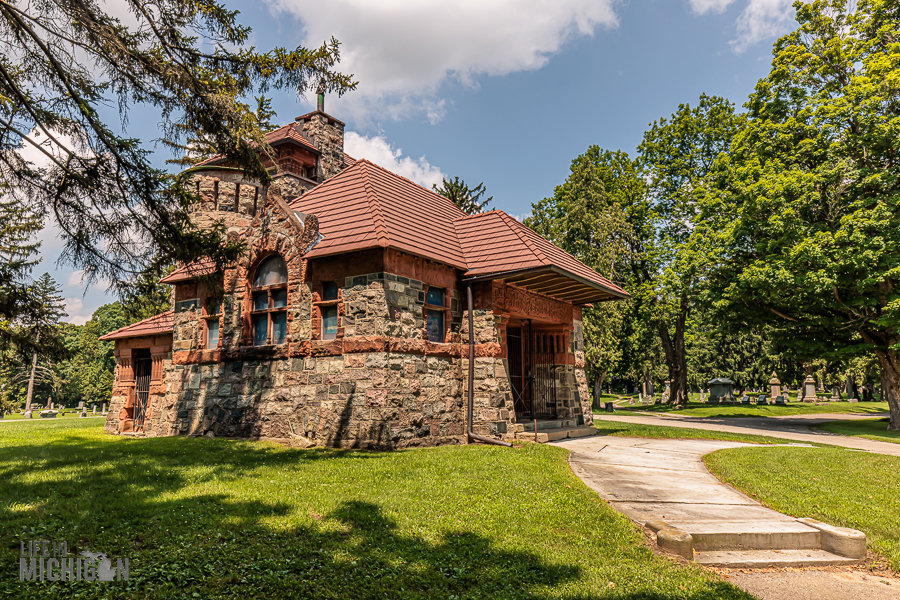
We met with Barry LaRue to uncover the history of Starkweather Chapel and the unexpected stories hidden within Highland Cemetery.
Highland Cemetery’s Starkweather Chapel
After launching our Life In Michigan podcast earlier this year, Amy Nesbitt kindly shared a list of potential guests she thought would be a great fit. “All should be good conversationalists with stories to tell,” she wrote. One name stood out: Barry LaRue.
Months later, we were at a Creative Washtenaw Happy Hour at 734 Brewing, where folks were introducing themselves and sharing current projects. Unbeknownst to us, Barry was in the crowd. When it was his turn, he mentioned leading a Highland Cemetery tour as part of Ypsilanti’s First United Methodist Church’s bicentennial celebration.
Meeting Barry LaRue
Chuck and I immediately leaned toward each other, less like poised podcast hosts and more like excitable fans spotting a rock star at a bar.
“Is that the Barry Amy told us about?”
“Wait—is that the Cemetery Tour?”
“Should we say something?”
Luckily for us, Barry didn’t notice our conspiratorial whispering from across the room. We eventually introduced ourselves, chatted briefly, and invited him to be on the podcast. I handed him a card and suggested he check out the show. He didn’t hesitate and said, “No need, I’d love to be on the podcast.” Or something like that—I was too excited to take notes. (The episode with Barry is dropping later this fall.)
While researching the names Amy had shared with us, I came across a Concentrate article about Barry’s role in renovating Starkweather Chapel in Ypsilanti’s Highland Cemetery. Long story short, I asked if we could tour the chapel before joining the cemetery tour.
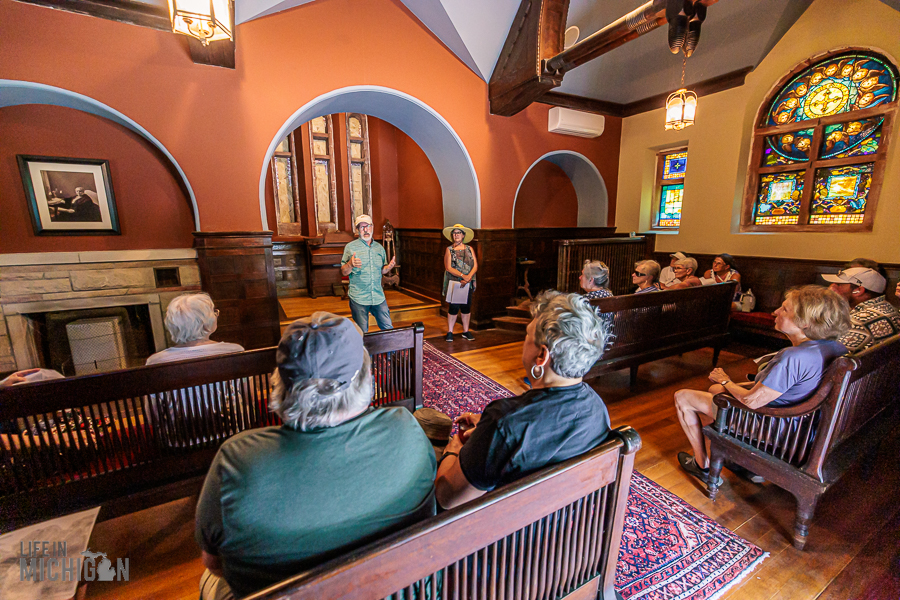
And that’s how we ended up sitting with Barry inside Starkweather Chapel on a sweltering Sunday afternoon in July, ready to hear its story.
Inside Starkweather Chapel
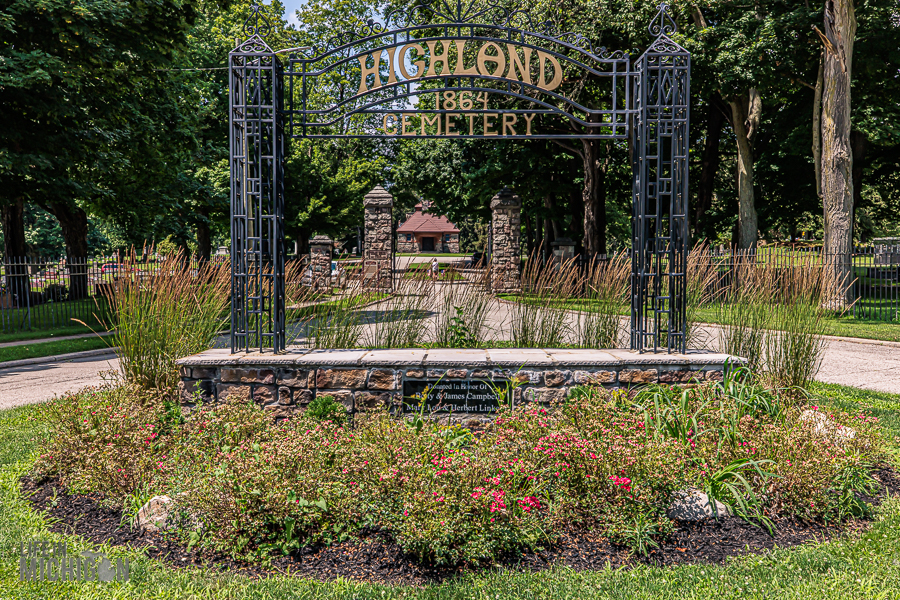
At first, it might seem strange, this fascination with an old chapel in the middle of a 150-year-old cemetery. But the moment you catch a glimpse of it, tucked between stone pillars at the end of the boulevard leading from Highland Cemetery’s main entrance, it all starts to make sense.
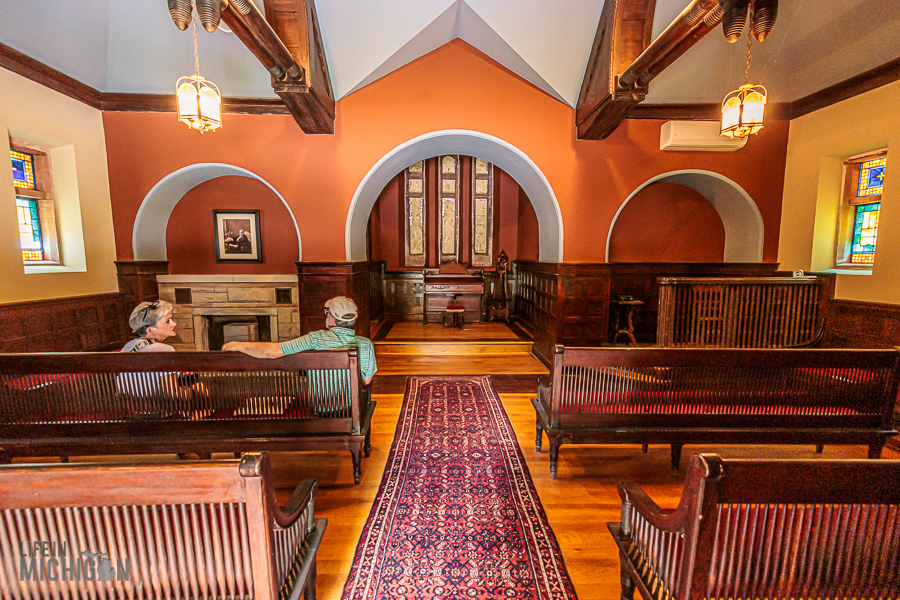
When you step inside, it spins into focus. The space feels suspended in time, quietly begging you to listen.
I took a seat with Barry in the front pew, barely noticing the sweat gathering behind my knees or the faint, distinctive dusty smell—the kind that lingers in old libraries and quiet museums. Light was filtering through the stained glass windows, casting soft colors across the polished chapel floor. It whispered that a story was waiting to be told.
Barry was ready, with reference material in hand. I was ready with hundreds of questions.
Uncovering Starkweather’s Story
Who was Mary Ann Starkweather, the woman who funded the amazing chapel?
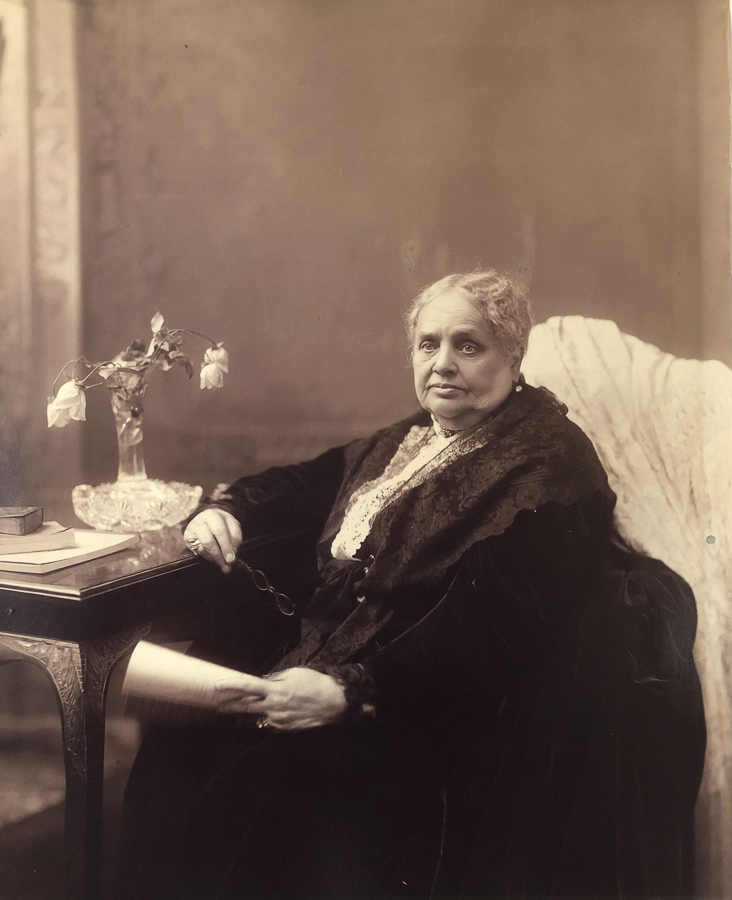
Photo credit: Barry LaRue
Barry consulted his materials. In the interest of space and time, I’ve abbreviated her biography.
Born Mary Ann Newberry, she came from one of Detroit’s prominent families. Her father, Elihu Newberry, was a merchant and farmer; her uncle, Walter L. Newberry, made his fortune as a Chicago banker and land speculator; and her brother, John, served in Congress. In 1839, she married John Starkweather, and the two eventually settled on a farm near Ypsilanti.
The Starkweathers did well, especially in local real estate, and in 1875, they moved into an elegant Italianate home on North Huron Street. John died in 1883. But it wasn’t from John that she inherited her wealth.
Mary Ann inherited a significant fortune from her uncle the following year. With no children to leave it to, she chose instead to give back, generously and intentionally, to her hometown.
Over the years, Mary Ann gifted Ypsilanti a series of enduring landmarks: Starkweather Hall on the Michigan State Normal School campus (now EMU), her home to the Ladies Library Association, and of course, Starkweather Memorial Chapel.
“She didn’t just write checks,” Barry said. “She put her money where it would matter most—to the cultural and spiritual fabric of this town. And when she died, downtown businesses actually closed for her funeral. That’s how much she meant to Ypsilanti.”
How was this chapel used?
Originally intended for funeral services at a time when funeral homes were not yet common, the chapel offered a warm, respectful place for families to gather.
“When this was built in 1888 and ’89, there was no tradition for funeral homes per se,” Barry explains. “You did funerals either in a church or your parlor. This chapel provided an alternative—a beautiful, seated setting regardless of the weather.”
Wondering how the chapel is used today? It still hosts funerals, as well as weddings and commitment ceremonies. For more information about fees and other details, please visit their website.
Funeral Homes Started Where?
Here’s a little cemetery tour trivia for you: funeral homes as we know them didn’t really exist when Starkweather Chapel was built. Back in the day, if you didn’t own a home or were just passing through town when you died, your funeral might have taken place in, of all places, a furniture store.
“Since the furniture dealer was making the coffin,” Barry explained, “They’d say, ‘You know, Tyrone just died and we don’t have a place to have a funeral.’ Oh, well, we can get some chairs from the church and put them in the back room and put a Tyrone on a couple of sawhorses, and we’ll have the funeral there.”
This practical setup eventually evolved into a new business model: the furniture store–slash–funeral home. Barry mentioned that families like Mack & Mack in Ypsilanti ran both, and one of those early furniture shops on North Washington eventually became the Stark Funeral Home, which is still in operation today.
Is That a Mummy in the Basement? Not Quite.
Since we have gone down the rabbit hole of funerals and furniture stores, here’s a gem from Ypsilanti’s past: during a renovation of the Mack & Mack furniture store on Michigan Avenue, workers discovered something unexpected in the basement—a cast iron casket, more than a century old.
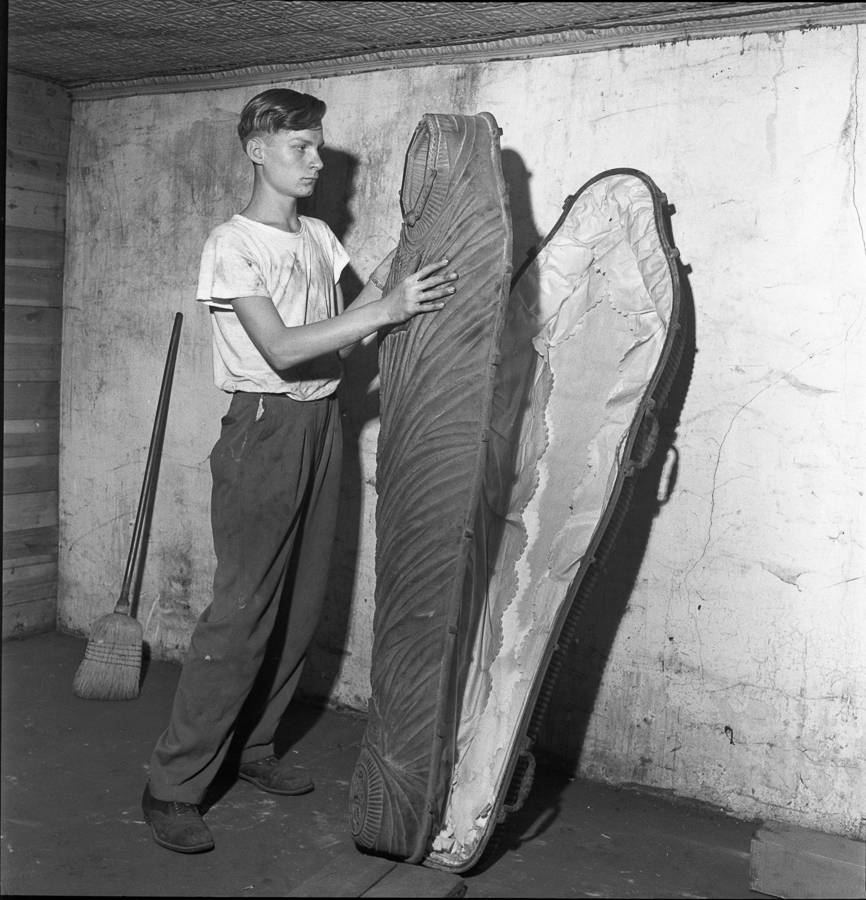
Photo courtesy of Ann Arbor District Library
No, it wasn’t a mummy. But it was eerie. Designed in the mid-1800s, the casket featured a hinged iron lid with a glass viewing plate, allowing mourners to see the face of the deceased. Before modern embalming became widespread, these sealed iron coffins helped preserve the body for viewing.
Mack & Mack wasn’t just a furniture store; it had deep roots in the funeral business. The building once housed a coffin-making operation and undertaking parlor, dating back to at least 1840. By 1876, the business became Mack & Mack, a name combining the surnames of its owners, McElcheran and MacAndrew.
As Barry might say, “That’s kind of, in a nutshell, that deal.”
Starkweather’s Windows
The chapel’s stained glass windows are some of its most captivating features. Several are Tiffany originals, and one round window even includes actual wire strings in a depiction of a lyre. “Those are actual tiny little wires,” Barry says. “Not that you’d play them—they’re pretty fragile—but it’s a cool detail you wouldn’t notice at first glance.”
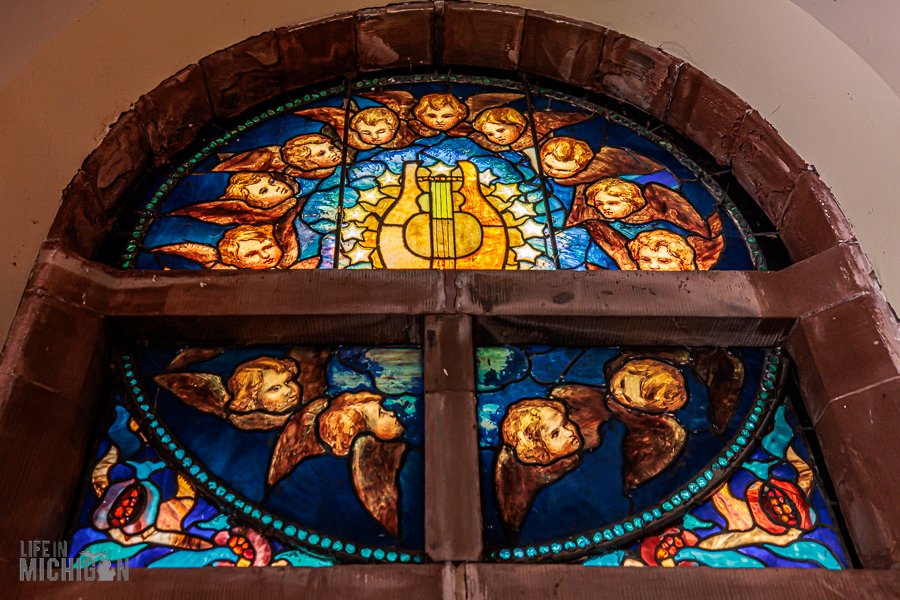
While some of the lower windows were lost to vandalism or theft in the 1950s, they’ve since been replaced by carefully crafted panels that match the original designs. These new windows also bear dedications from modern donors, linking the present to the past. “My sister and I sponsored one,” Barry shares. “A widow of our former board president did another. It’s a way for people to be part of the chapel’s story.”
Restoring Starkweather Chapel
Preserving Starkweather Chapel has been a true labor of love for Barry. With help from a few dedicated community members, Barry led the charge to undo decades of wear and neglect—from peeling indoor-outdoor carpeting glued to original tile to haphazard repairs that masked the chapel’s historic character.

Photo credit: Barry LaRue
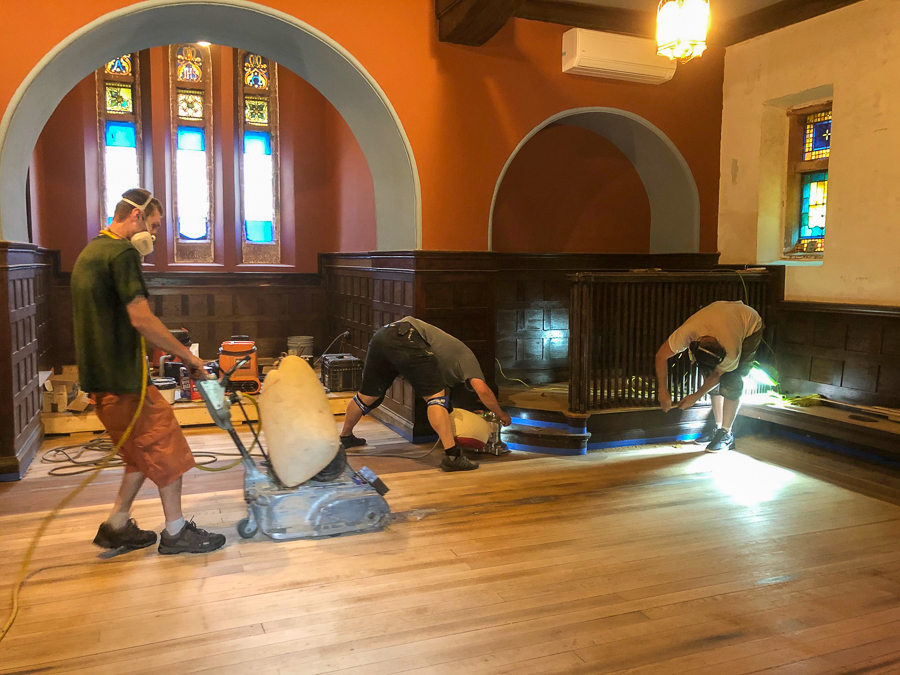
Photo credit: Barry LaRue
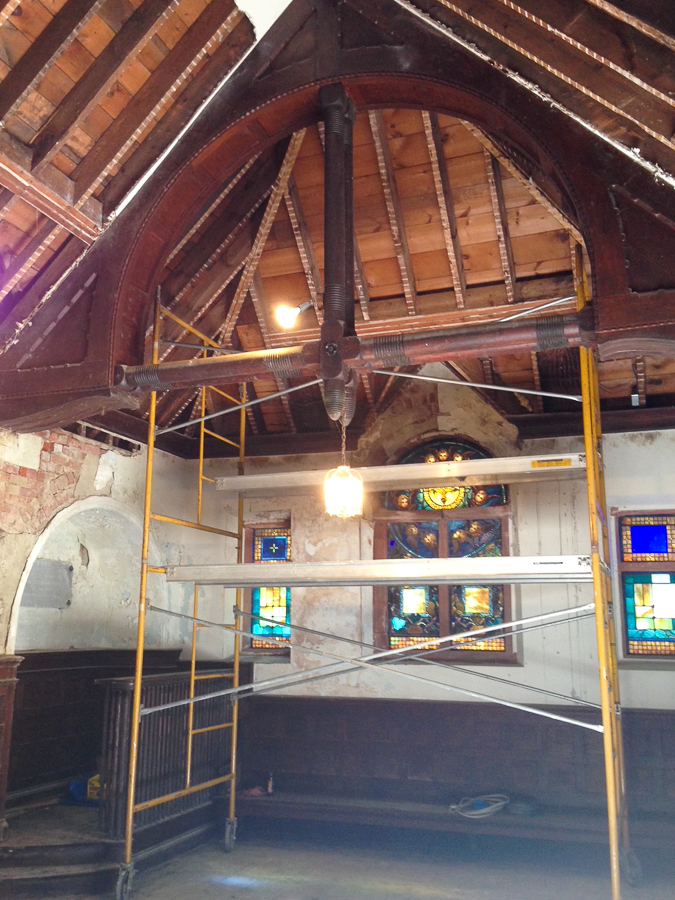
Photo credit: Barry LaRue
But he didn’t just oversee the restoration; he got his hands dirty. “I kind of took the role of general contractor,” Barry said, describing his coordination of roof repairs, plaster restoration, and stained-glass conservation. Volunteers like Rex Richie pitched in too, helping restore the chapel’s woodwork. Grants from the Michigan Architectural Foundation and revenue from a DTE solar field lease on unused cemetery land helped fund much of the work. “That little solar field is on land too low and wet for burials,” Barry explained, “but it’s helping us take care of the chapel—so that worked out nicely.”
If you’d like to help continue this work and ensure Starkweather Chapel remains a vibrant part of Ypsilanti’s story, consider donating to the Highland Cemetery Association’s Chapel Fund. Every bit helps preserve the past for future generations.
Highland Cemetery’s Unique Design
Highland Cemetery wasn’t laid out like the flat, grid-like cemeteries we’re used to today. “It’s what’s called a picturesque rural cemetery,” Barry explained. “The idea was to enhance the natural topography—rolling hills, curving roads. It was meant to be a place of beauty and reflection, not just burial.”
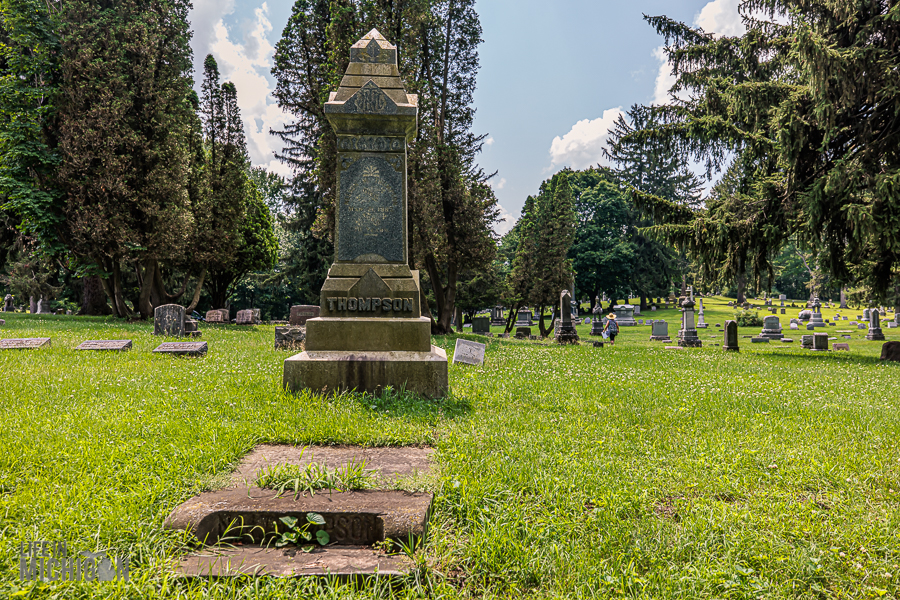
That vision came from Colonel James Lewis Glenn, who designed the cemetery in 1863 with a focus on creating a peaceful, park-like setting featuring winding roads, scenic overlooks, and plenty of trees. It was a space meant for the living as much as for the dead.
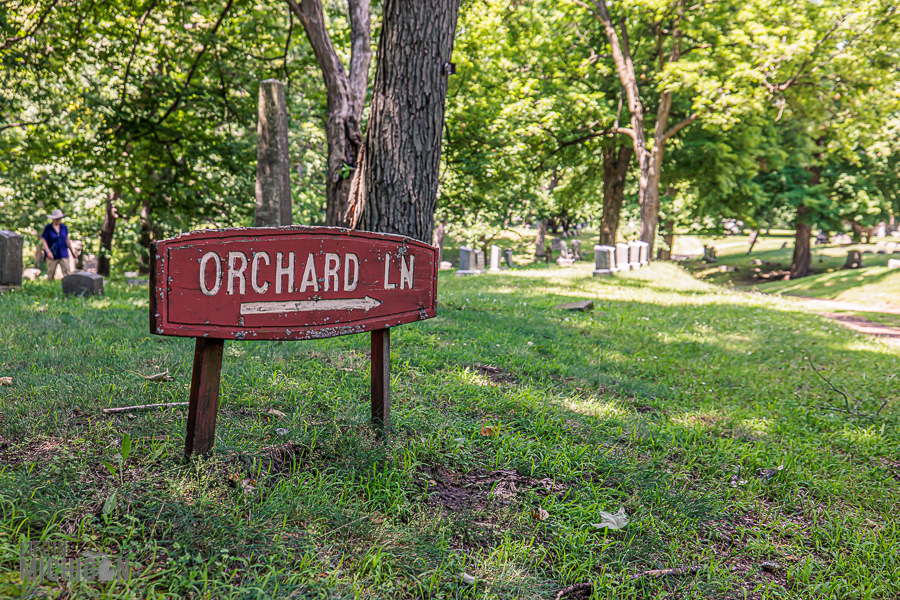
The cemetery came to be after earlier burial grounds in Ypsilanti—like the one where Prospect Park now sits—became overcrowded and neglected. A group of determined locals, turned down by the city council, took matters into their own hands. They formed a nonprofit, bought the land, and created Highland Cemetery as a community-run operation.
“It’s still managed that way today,” Barry noted. “No city funds, just lot sales and donations.”
Families Behind the Glass
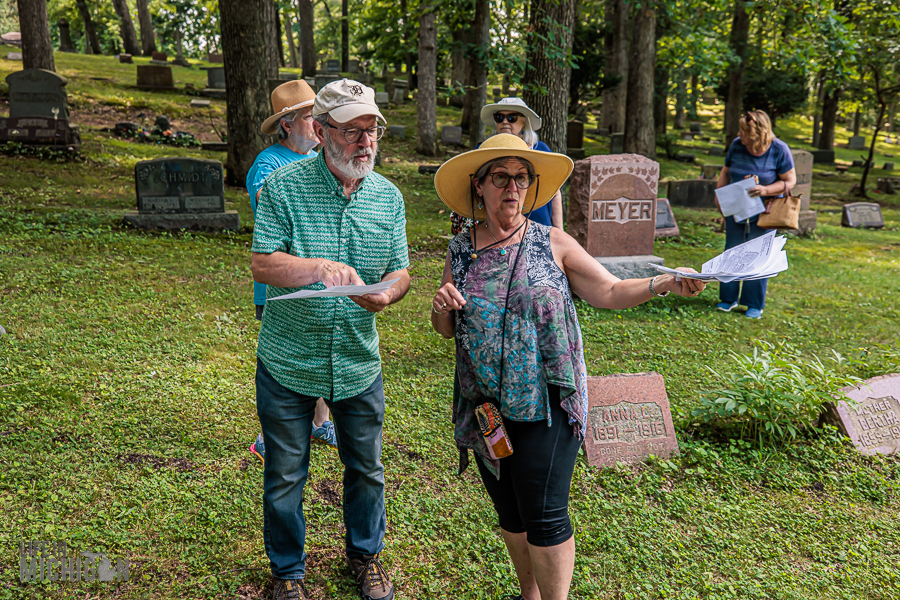
That’s when Karen Jania stepped in, leading a walking tour that stitched the stained-glass windows of First United Methodist Church to the gravestones in Highland Cemetery.
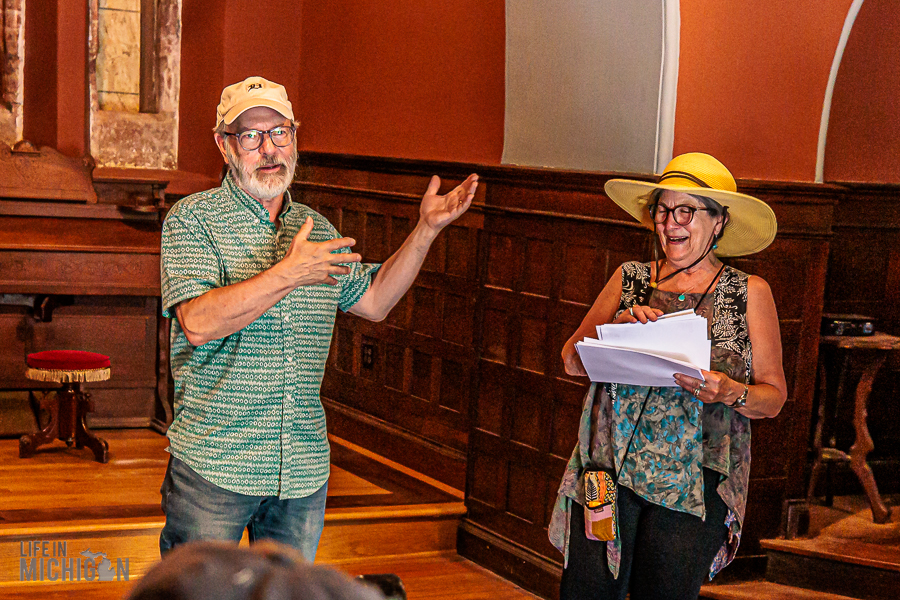
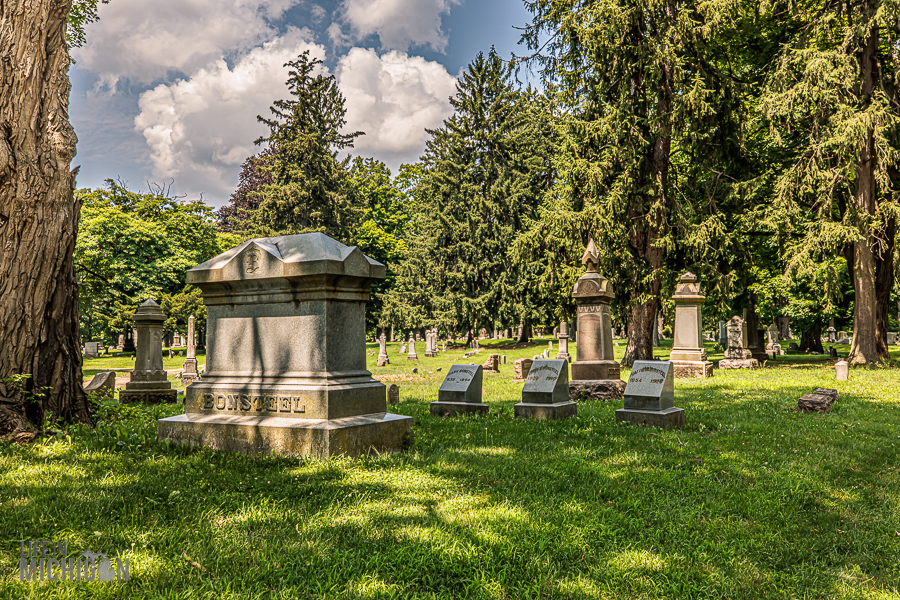
Karen is the church historian and former archivist at U-M’s Bentley Historical Library. She researched the families behind the 29 memorial stained-glass windows at First United Methodist Church. Many of those families are buried in Highland Cemetery, and their names still echo across Ypsilanti on street signs, buildings, and local lore. Karen mapped out the graves and led a walking tour, sharing insights about the people behind the windows and their legacies.
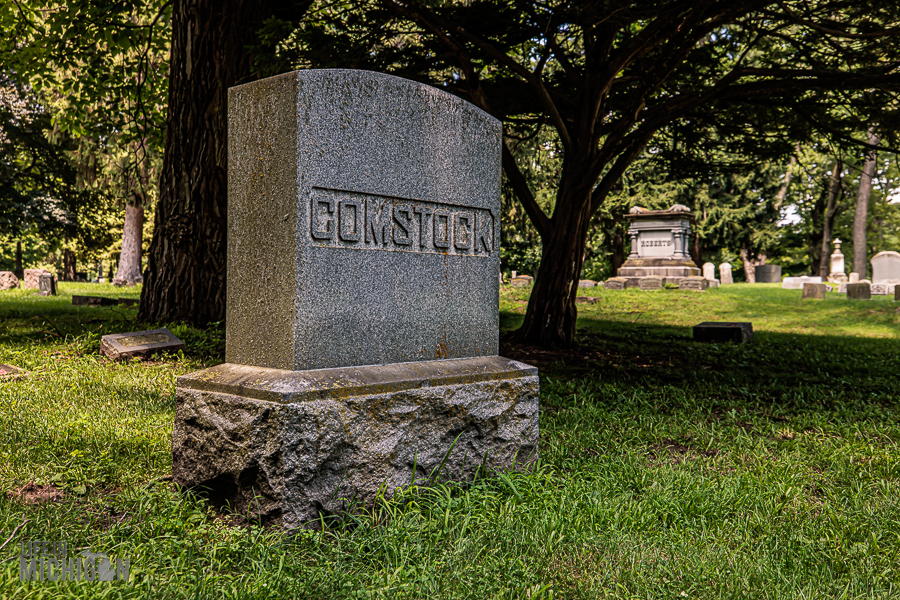
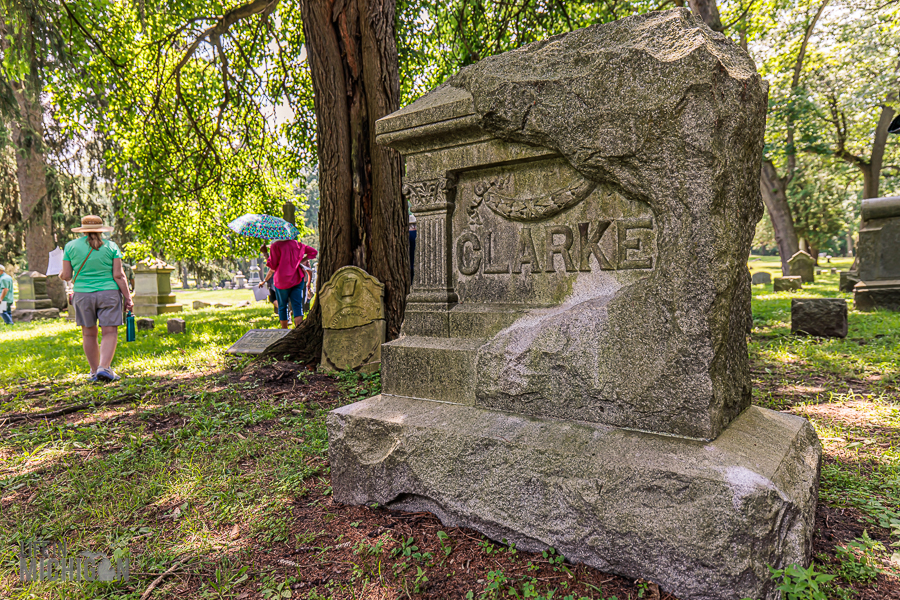
She even included a scavenger hunt for us, challenging us to find the Rice family.
Saloon Stories
“George Cady ran a saloon in Depot Town,” Barry shared when we reached the Cady headstone.
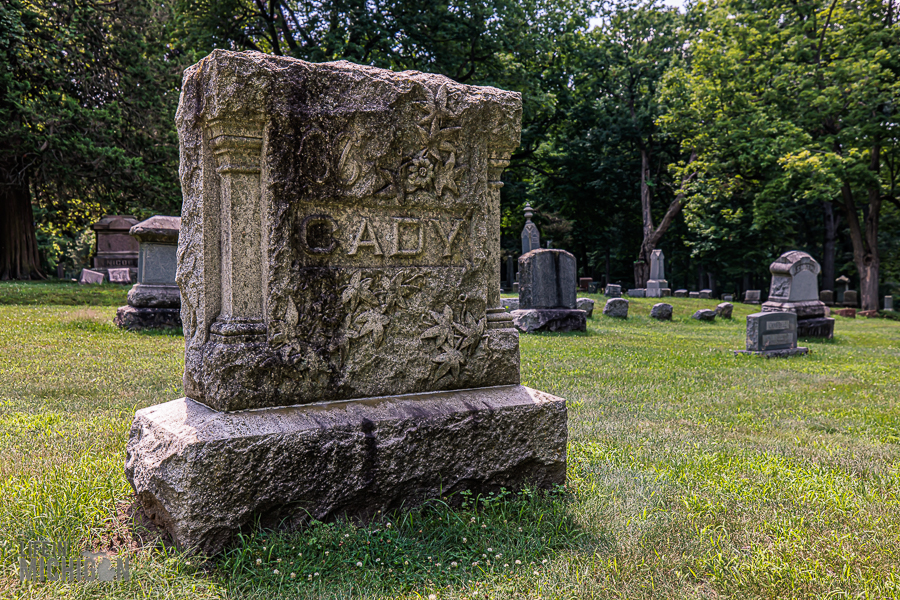
Then came the juicy bit: “I don’t want to mention the fact that there was a house of ill repute on the third floor of that saloon,” he added, muffling his voice. “And a horse betting parlor on the second floor. But I don’t believe Mr. Cady had anything to do with those. He was just running the saloon on the first floor.”
Postmasters, Commodores, and Civil War Graves
Otis Lee, a former postmaster, rests here with his three wives—Phebe and Lucy, who both died at 37, and Minnie, who outlived them all, including Otis.
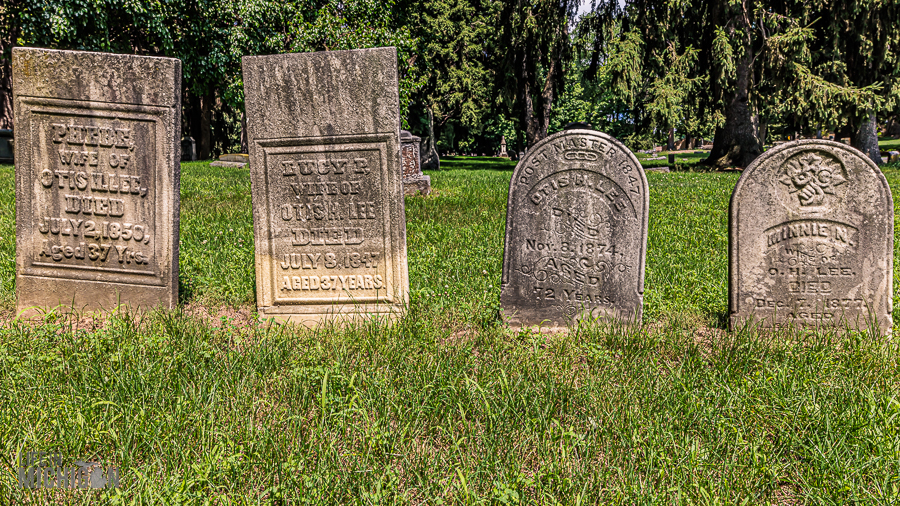
There’s a story there, and one day, I’d love to uncover it.
Not far off, you’ll find Commodore James Paterson McKinstry and Charles Shier, who died in the Civil War—just a few among the many names etched into Highland Cemetery’s winding history.
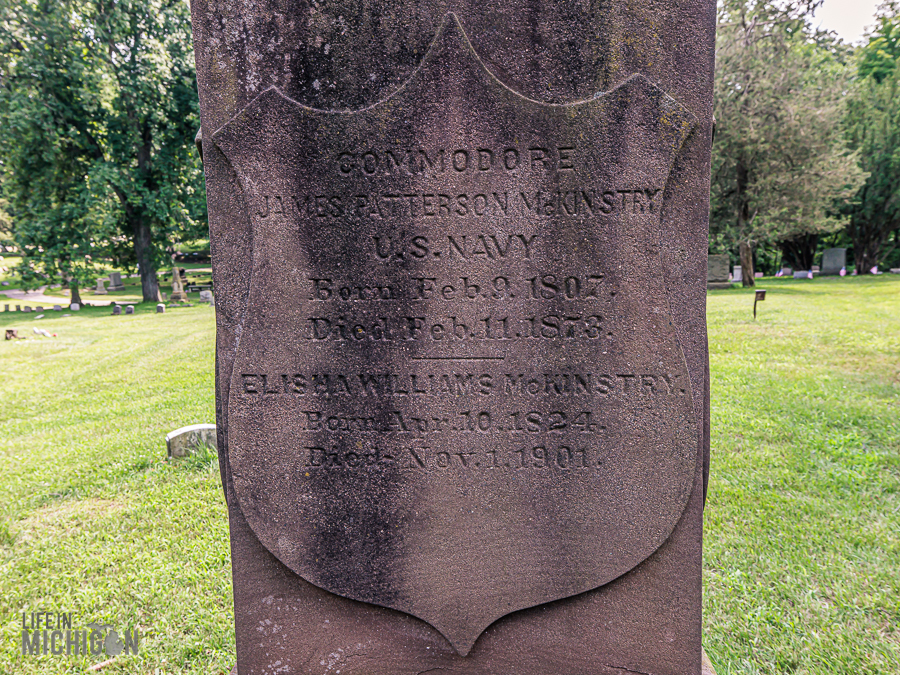
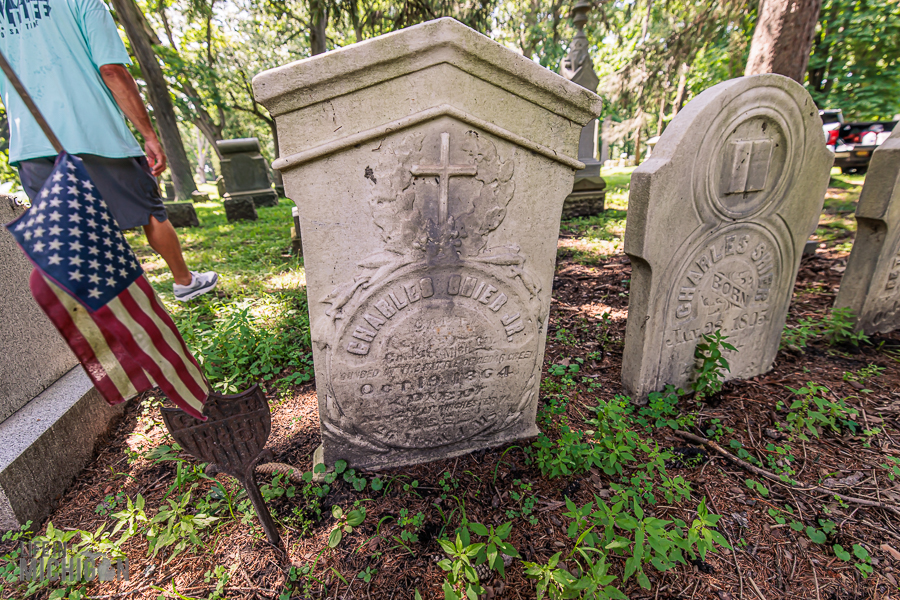
If you’re curious to walk among these stories yourself, keep an eye on Ypsi Real or the Ann Arbor Observer, as they often share tour dates. Who knows what you’ll discover.
Where the Past Still Speaks
As we wrapped up our visit, I kept thinking about how much life lingers in a place meant for the dead. Thanks to Mary Ann Starkweather’s vision and Barry LaRue’s devotion, the chapel isn’t just standing, it’s speaking. And if you listen closely enough, you’ll hear more than just history. You’ll hear a community’s story still unfolding.
More Pictures
We have more pictures in our gallery.
Become a Supporter!
We warmly invite you to join our Life In Michigan community. Your support is not just appreciated—it is essential. It enables us to continue sharing the unique and captivating stories that showcase Michigan in all its vibrant glory. Whether you buy us a beer, treat yourself to a snuggly warm hoodie, or provide ongoing support through Substack, every contribution helps enhance our mission.
If our content resonates with you, we encourage you to become ambassadors of our stories. Share our work on your social media or forward a link to someone who would appreciate it as much as you do. Your support, in any form, breathes life into our cause and keeps the spirit of Life in Michigan thriving.
Thank you for being a vital part of our community.
Stay Connected
We’d love it if you liked our Facebook page. Better yet, subscribe to our Sunday Sip newsletter through Substack. You can also find us on Instagram.